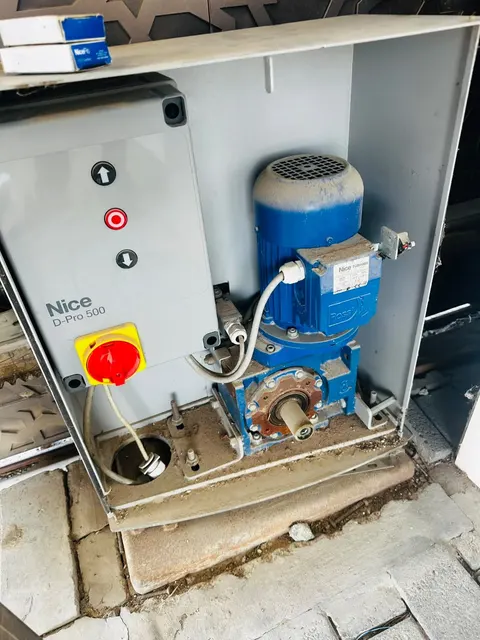
Where sliding gates earn their place
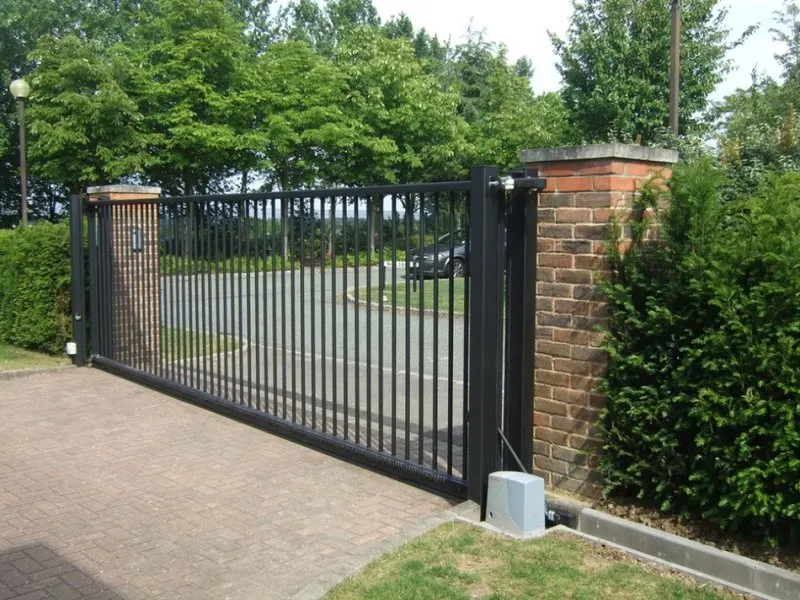
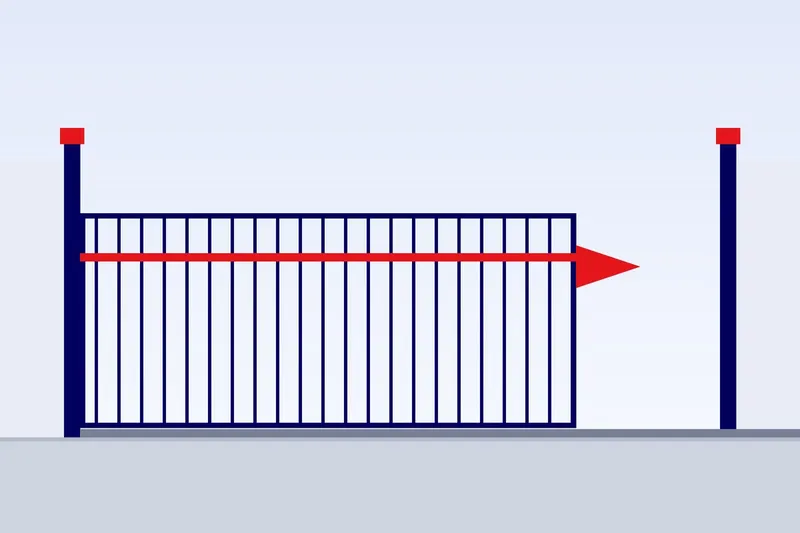
People choose a slider when the driveway is short, the pavement is close, or a car often waits at the gate line. Because the leaf never leaves the boundary, nothing blocks the street or the forecourt while it moves. The trade-off is wall space: a slider needs a clear run beside the opening, roughly the gate width, plus room for the motor. If that run is not there, a telescopic leaf or a swing gate may fit better.
Choosing the type of slider
| Type | How it moves | What it needs | Best for |
|---|
| Track-and-wheel slider | Runs on a floor rail with wheels | Level, firm ground, rail kept clean | Short to medium widths |
| Cantilever slider | Hangs from rollers, no floor rail | Strong foundation and tail length | Dusty yards, uneven ground, wide cars |
| Telescopic slider | Leaves fold over each other | Narrow side run, more moving parts | Tight walls, long openings |
Cantilever designs are popular in sandy yards because there is no groove for grit to pack into, although the tail section is long. Rail-based sliders are simpler but depend on a clean, straight track.
How it is built and fitted
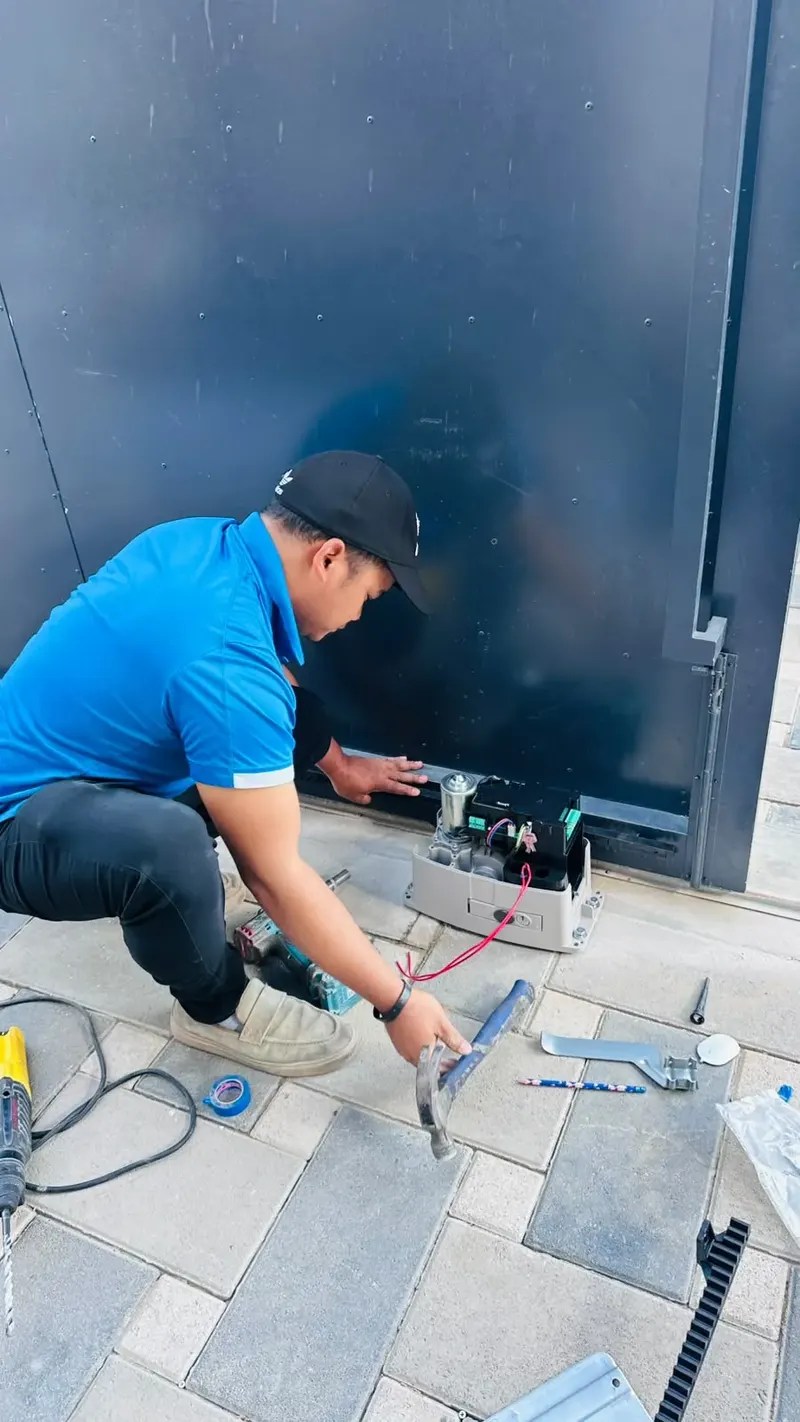
- Mark the line of travel and check the wall or pier is plumb and long enough.
- Cast the motor plinth and foundation, and run separate conduits for power and low-voltage controls.
- Fix the rail or guide posts and hang the leaf, checking it rolls freely by hand before any motor is added.
- Bolt on the rack along the leaf and set the pinion height so the teeth mesh with a small, even clearance.
- Wire the control board, photocells, flashing lamp and edge, then run the learning cycle.
- Test obstruction stop, reversing, the manual release and each remote before handover.
Safety features that matter
A sliding gate leaf is heavy, and the shear point at the closing edge is where injuries happen. Photocells across the opening, a sensitive edge, force limiting, a warning lamp and a clearly shown release are part of a correct installation. EN 12453 is the standard that covers the safety of power-operated gates, and UAE rules on power door safety refer to it. Ask the installer to explain how the gate responds to a person standing in the way, not only how fast it runs.
Consent before you order
If you live in a master community such as those run by Emaar or Nakheel, apply for the modification approval before work starts, since unapproved work can be stopped or fined. In a tower or shared compound, an entrance gate counts as a common-area change and needs written consent from management or the owners' body. We can provide dimensions, leaf drawings and operator data sheets for the application, but we cannot promise approval or timing.
Dubai conditions that wear sliders
Sand is the chief enemy: it builds up in floor rails, packs between rack teeth and coats photocell lenses, which then cause false stops. Humidity near the coast corrodes wheels, bolts and board terminals. Summer sun heats a dark leaf, which expands and can bind in tight guides. Brushing the track clear weekly, keeping the rack lightly lubricated, wiping lenses and giving the motor shade and airflow all stretch life. If a motor keeps cutting out in hot weather, a leaf that has become stiff is a more likely cause than the motor itself.
What goes wrong first
- Gate stops short of its limit: dirt on the rail, worn wheels or limit drift.
- Grinding noise: worn rack teeth or a pinion set too tight.
- Motor runs, gate does not move: the release is left unlocked or a gear is stripped.
- Reverses on closing: dirty photocells or a force setting that is too sensitive.
- Remote range dropped: weak battery or a poor receiver position.
For a symptom walk-through, see automatic gate not opening. Repairs are handled under sliding gate repair, and new fitting under sliding gate installation.
Operators and brands
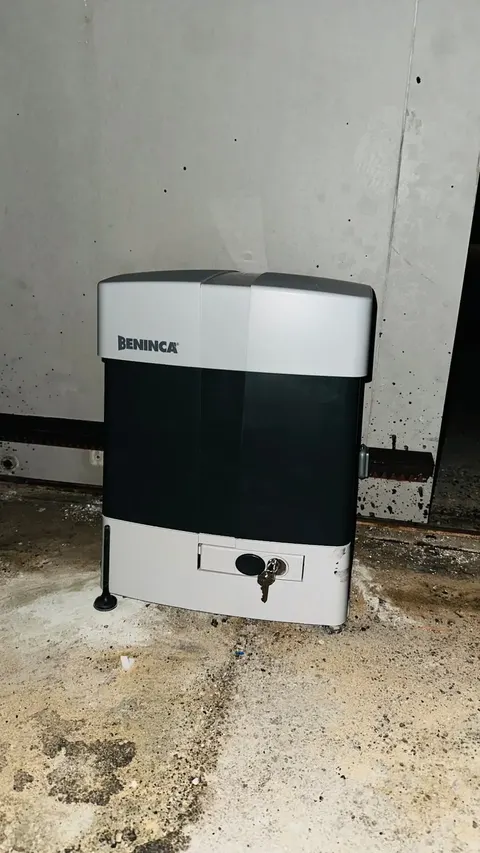
For sliding gates the catalogue lists Hormann and Marantec operators on this service line, and the full product page shows the wider range of drives we can supply. Pick the operator by leaf weight, gates per day and wind exposure, then add a battery backup if power cuts are a concern. See the product page automatic sliding gates for leaf and drive options, and the gate motors page for motor selection.
Leaf material and finish
Steel gives a solid, secure leaf, but every cut edge and weld needs a coating that survives humid air; a poor finish will show rust at the bottom rail first. Aluminium is lighter and kinder to the motor, which helps on long leaves, and it stays presentable near the coast. Slatted infill lets air through and reduces wind load, while a solid panel gives privacy but catches more wind and heats up in direct sun. The finish colour matters too: dark powder coats absorb heat and expand more. We discuss these trade-offs with the leaf weight, because the operator is chosen from the final weight.
Your site visit
We measure the opening and the wall run, check levels along the track, find the power point and look at where vehicles stop. If your gate is already installed, we check wheels, rack and limits. Share a photo of the gate line through send a photo to speed up the first look.
Why quotes differ
The main drivers are gate width, leaf weight and material, whether it is a rail slider, cantilever or telescopic, the foundation work, the number of remotes and extra access devices, and how far the cable must run. Reusing an existing leaf lowers fabrication work. A written quote follows the site visit; ring or WhatsApp +971 50 494 8667, or use the quote form. Compare Dubai Hills Estate villa frontages with Al Quoz yards and you will see why each job is measured individually.