
Short answer: A Dubai building can handle delivery riders and couriers without opening residential floors to strangers by choosing one of six options: a staffed delivery desk, a parcel room or locker, a one time pass, an intercom release by the resident, a barrier before the lifts, or a side delivery point. Pick the option that fits the lobby, the staff and the number of deliveries, and log every release.
In short
- Decide first whether riders may pass the lobby at all.
- A delivery desk or parcel room takes most traffic out of the lifts.
- One time passes and intercom release leave a record of who went where.
- A barrier before the lifts protects resident floors while the lobby stays open.
- Every option must release on a fire alarm and keep a route for wheelchairs and prams.
Why do delivery riders create a security problem at tower entrances?
Because they arrive all day, in a hurry, and often with no name on a list. A tower with hundreds of apartments can see many riders in an evening peak. Each one needs to reach a door or hand over a parcel, and each one is an unknown person to the building. If the lobby door opens on request, anyone can claim to be a rider. If it never opens, residents wait at the door and riders block the lobby.
Building managers in Dubai Marina, Downtown Dubai, JBR and Business Bay deal with this every day. The goal is simple: keep the rider's trip short, keep strangers out of residential floors, and keep a record. The owners association or building management sets the policy, and the door and access control system carries it out. Confirm the rules with your management and the authority before you change how entrances work.
What are the six policy options?
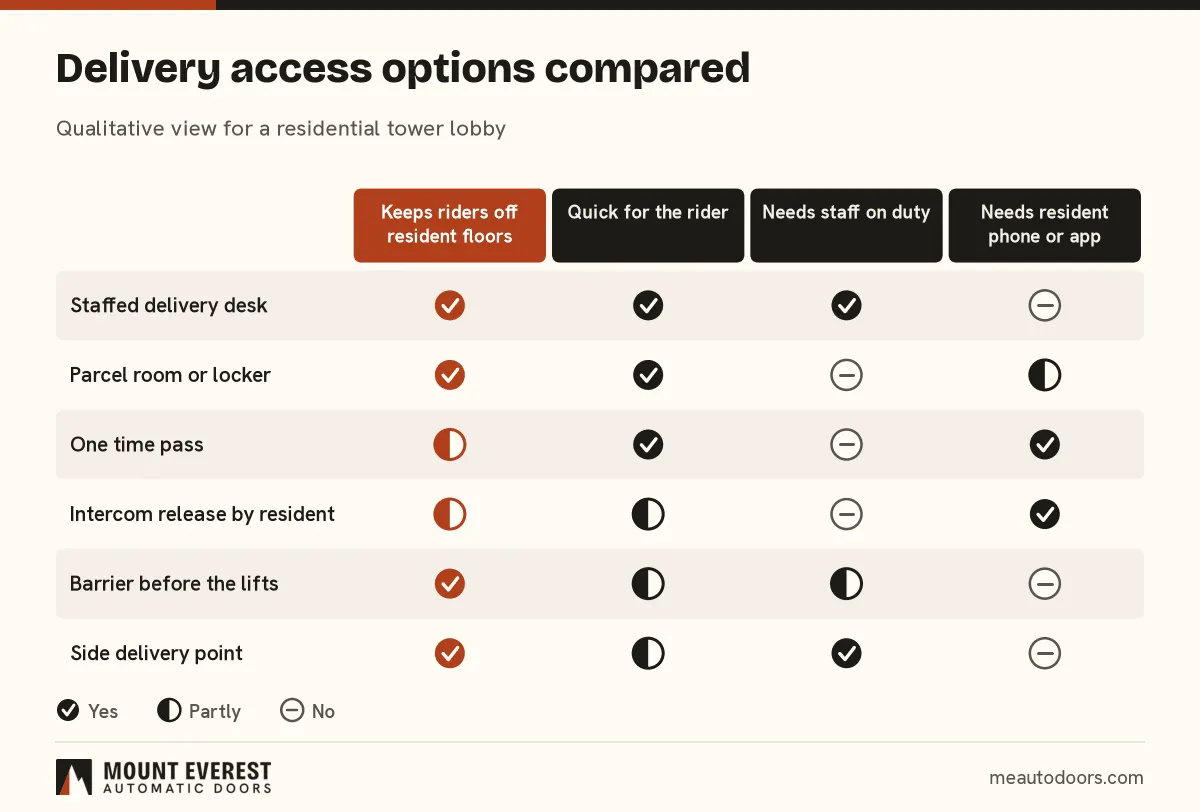
Each option moves the handover to a different place. Read the table first, then the details.
Six options, how they work and the trade off
| Option | How it works | Main trade off |
|---|---|---|
| Staffed delivery desk | Riders hand parcels to a desk in the lobby. Staff call the resident | Needs a person on duty at peak hours |
| Parcel room or locker | Riders place parcels in a locker or room and the resident collects | Needs space and a way to tell the resident |
| One time pass | The resident creates a pass that works once or for a short window | Needs the resident to act before the rider arrives |
| Intercom release | The rider calls from the door and the resident releases it | A door held open or a call ignored slows the rider |
| Barrier before the lifts | The lobby is open, but a barrier stops access to lifts without a pass | Needs a barrier and a clear route for wheelchairs |
| Side delivery point | A separate entrance or bay handles riders and vans | Needs space, lighting and supervision |
How does a staffed desk or a parcel room work?
A desk or parcel room keeps riders in the lobby, so there is no need to move them through the building. It is the strongest option for residential security because the handover happens away from the lifts.
A staffed desk works when the building already has a concierge. The staff member takes the parcel, logs it and calls the resident. A parcel room or locker bank works without a person on duty at every hour. The rider drops the parcel, the system tells the resident, and the resident collects with a card or code. Ask the vendor how the lockers are linked to the door, who can open them and what happens when the power goes off. Our automatic sliding glass doors and automatic revolving doors often form the main lobby entrance that leads to the desk.
How do one time passes and intercom release work?
A one time pass lets a resident invite a rider without opening the door to everyone. The resident generates a code or a QR pass, the rider presents it at a reader, and the door or barrier releases once. The entry is logged with a time. An intercom release works the other way round: the rider calls from the door and the resident decides.
Both depend on access control hardware and, for passes, a visitor management setup. Our short answers on linking turnstiles to visitor management software and the difference between an intercom and access control explain what each part does. For readers and controllers, we work with brands such as ZKTeco and Suprema.
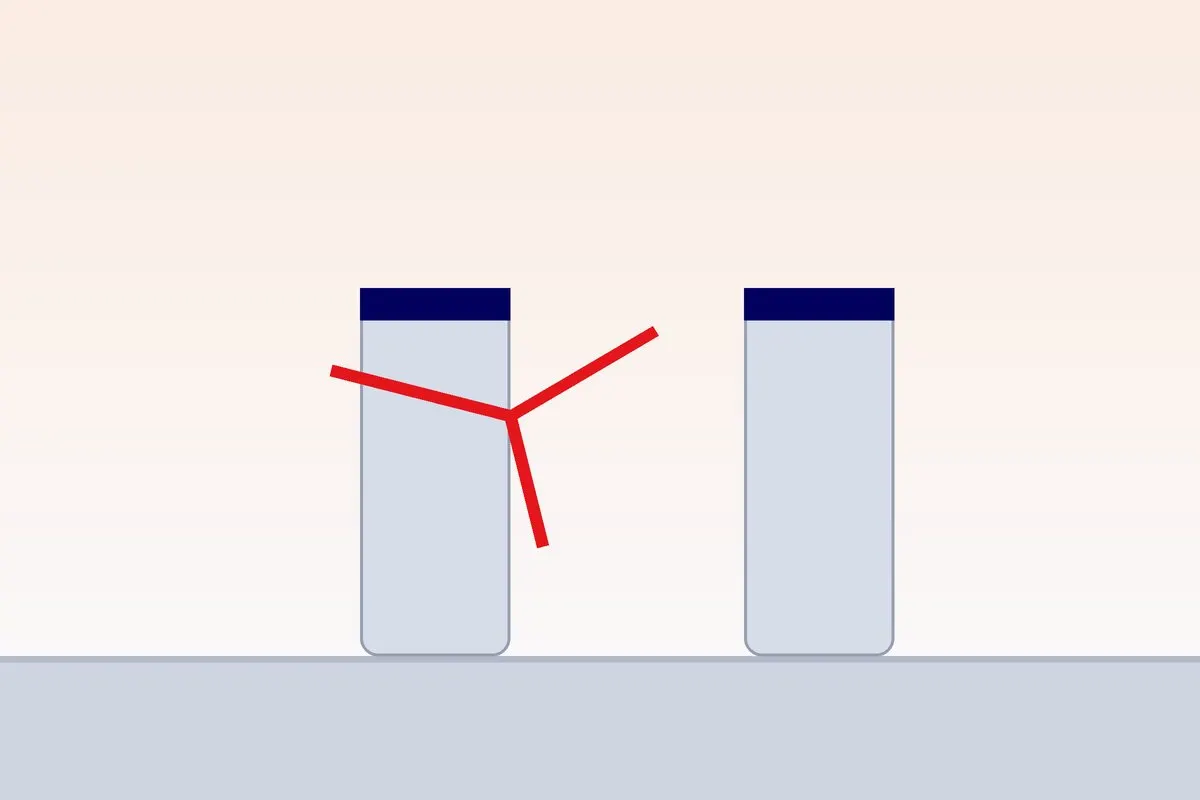
The weak point is tailgating, where a second person follows the first through. A rider who is waved in by a resident can hold the door for a stranger. Use a barrier or a speed gate that opens for one person at a time, and read whether a swing barrier prevents two people sneaking in on one card.
When does a barrier before the lifts make sense?
When you want the lobby open and the residential floors closed. The rider enters, walks to the desk or lockers, and cannot reach a lift without a pass. This suits towers with a large lobby and a mixed use podium.
The barrier can be a swing barrier, a tripod turnstile or a full height turnstile, depending on the traffic and the look of the lobby. See the lobby entrance choice between a swing barrier and a turnstile and our comparison of tripod, flap barrier and full height turnstile. For the equipment, see swing gate barriers and turnstile gates. Keep a wider lane next to it for wheelchairs, prams and luggage, as covered in the FAQ on accessible entry next to a turnstile.
What about delivery vans, bikes and the car park ramp?
Riders on bikes and drivers in vans often enter through the car park instead of the lobby. If the ramp is open to them, the policy has to cover it. Options include a dedicated bay near the ramp entrance, a short stay rule with a pass, and a barrier at the ramp that releases only for passes. A basement ramp also needs a safe route for pedestrians, so riders do not walk through vehicle lanes.
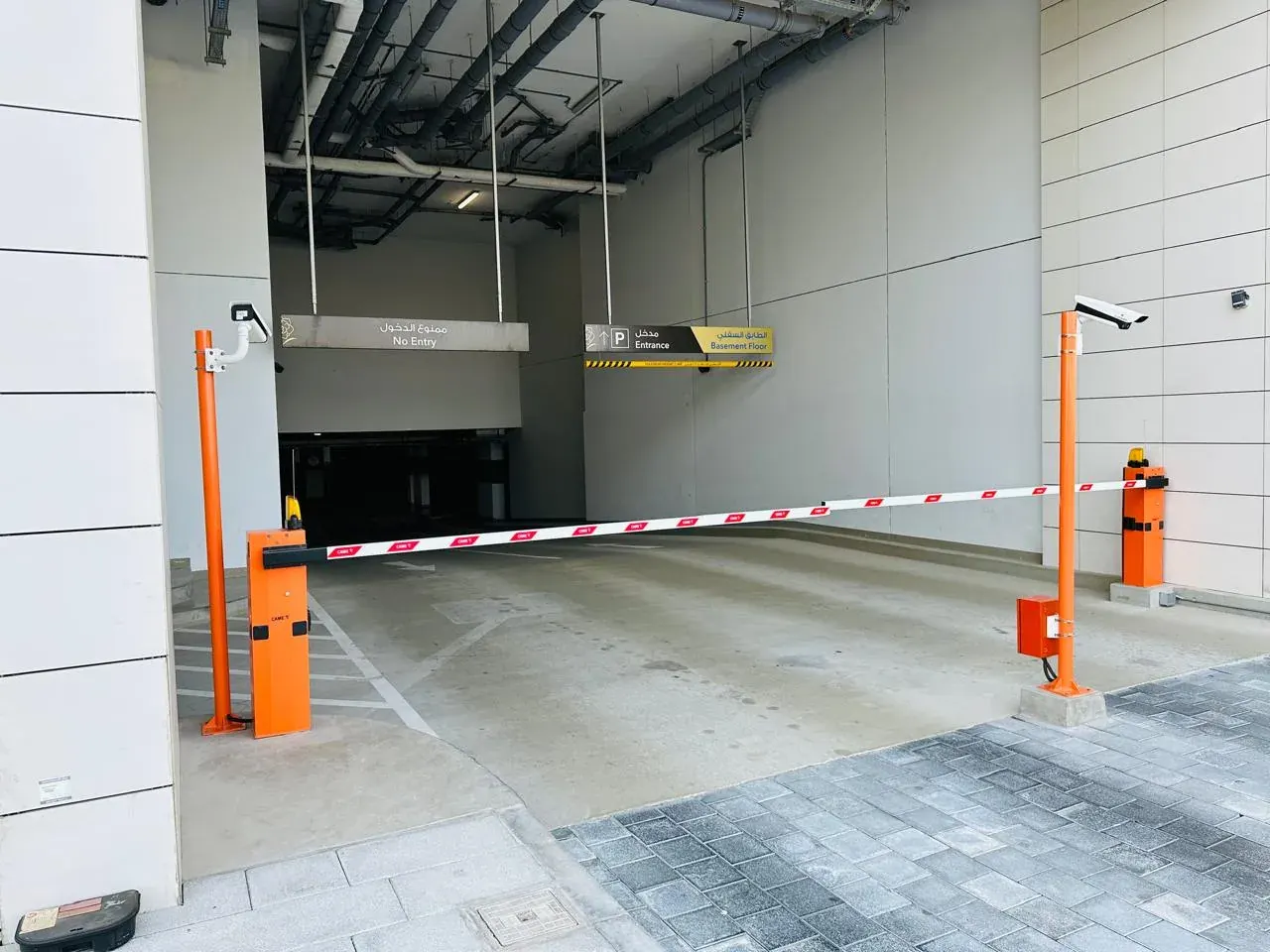
For vehicle lanes, a boom barrier with a loop and a safety beam is the usual choice, but ramp space and sight lines decide the layout. See a recent job: the gate barrier installation in Dubai Hills, where the record describes a barrier at a basement car park entrance. Layout always depends on the site, so we survey before we advise.
How do you decide which option fits your building?
Start with the lobby, the staff and the volume of deliveries. Use the flow below as a conversation starter with your management.
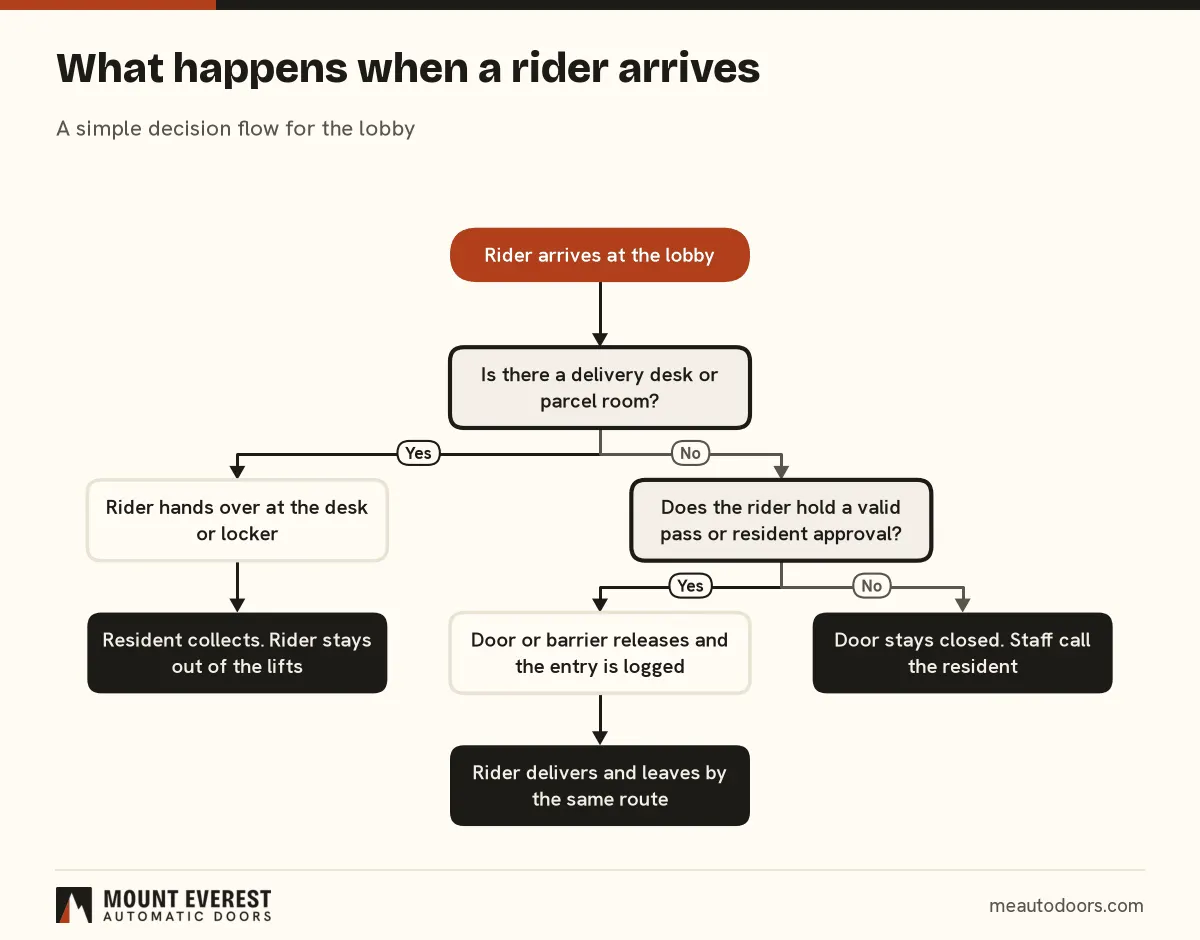
- Count peak deliveries per hour on a normal evening, using the security log if you have one.
- Check the lobby for space: desk, lockers, a second barrier line.
- Decide who is on duty at peak hours and who pays for it.
- Choose the main option, then add one back up for when it fails, such as the intercom when the desk is busy.
- Test the fire alarm response, the power failure response and the wheelchair route before you go live.
What must every option do in a fire or power failure?
Every option must let people leave the building, and the rules for fire exits belong to the building's fire strategy and the authority. An electric lock or barrier that holds people in during a fire is a serious fault. Typical designs release on the fire alarm signal and open on loss of power, but the design for your building must follow the consultant and Civil Defence requirements. Read our answer on how a fire alarm affects electric locks and access control, and our guide to access control and fire alarm integration in Dubai.
What to send us
- A photo of the lobby from the entrance, and one of the lift lobby.
- The width of the lobby lane and any columns or desks that limit space.
- The current door type and the access control brand, if there is one.
- How many riders you see at peak times, and whether vans use the car park ramp.
- Whether you have a concierge, and at which hours.
- Your building's fire alarm contact and who approves changes to the entrance.
How does a visit with Mount Everest work?
Mount Everest Automatic Doors is an installer and service company. We do not manufacture the barriers, readers or doors we fit. Our base is in Al Quoz, Dubai. We visit the lobby, watch the entrance at a busy time if the building allows, and suggest an option that matches your staff and your layout. We then give a written quote and test the fire alarm, power failure and accessible route before handover.
For access control and entrance equipment, see our access control systems and intercom systems pages, access control installation in Dubai, and our guide to access control and turnstiles for towers on Sheikh Zayed Road. A maintenance contract keeps readers, barriers and doors in order after the change.
Frequently asked questions
Can we ban delivery riders from entering the lobby?
Many buildings do, using a desk, a locker bank or a side door. The policy must still fit the lobby layout and the staff on duty, and it must work in an emergency. Check the rules with the owners association or building management, and give residents a clear way to collect parcels so the ban does not push riders upstairs.
Is a QR pass secure enough for a courier?
A QR pass is as secure as its rules. A pass that works once or for a short window and is tied to a resident's request is a strong option. A pass that never expires or can be shared widely is weak. Ask the vendor how passes are created, how long they last and what the log shows.
What stops a rider following a resident through the door?
Tailgating is stopped by a barrier or speed gate that opens for one person at a time, a camera that watches the lane, and a clear rule that residents do not hold doors for strangers. A single door with a reader is weaker. A turnstile or swing barrier with sensors is stronger.
Do parcel lockers need power?
Most electronic lockers need power and a network link to notify residents, so ask what happens in a power cut. Some designs keep locked compartments secure and release only on a code. Ask the vendor to state the behaviour in a blackout, and test it before going live.
How do we keep a route for people in wheelchairs and with prams?
Provide a wider lane beside any turnstile or barrier, with a swing leaf or a wide opening that staff or a button can release. Do not rely on a turnstile alone. The route must be clear of desks and lockers, and it must open on the fire alarm.
Can the same system also log contractors and cleaners?
Often yes, because the same readers and passes can handle contractors, cleaners and visitors. The difference is the time window and the floors allowed. Keep a separate profile for each group, and ask the vendor how a lost pass is cancelled.
Ready to plan delivery access for your building?
Call +971 50 494 8667 or use the quote form. Send photos of your lobby and entrance through send a photo, or book a site visit so we can look at the real space. We work in Dubai first and book jobs in other emirates by appointment. We give a written quote after seeing the job, and we do not guess prices.
Want this done properly?
Send a photo of your door or gate and we will tell you what we see.