Big 5 Global 2026 Dubai: High Speed Door Kit We Installed
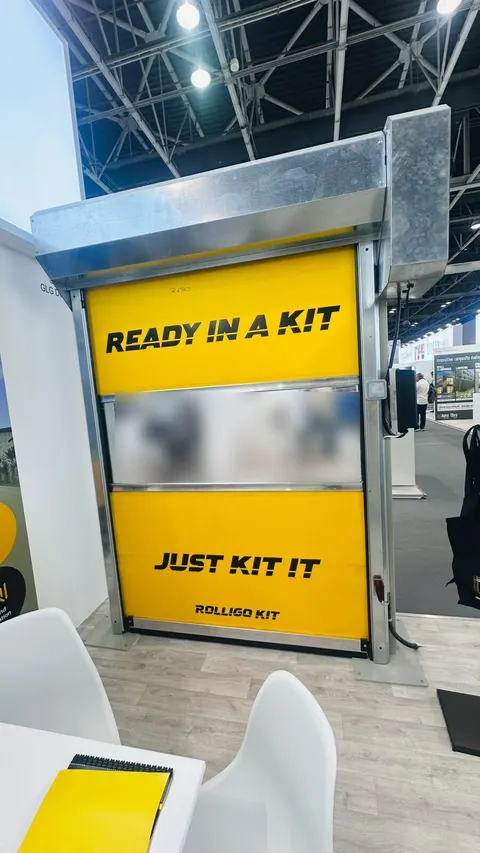
Mount Everest Automatic Doors installed this kit high speed door, the GLG Rolligo Kit, on the Italian pavilion at Big 5 Global 2026, Dubai …
DubaiMon,Tue,Wed,Thu,Fri,Sat 09:00 to 18:00
Dubai
Professional sliding barrier install by Mount Everest Automatic Doors in Dubai. Free site visit and a written quote.
Looking for sliding barrier installation anywhere in Dubai? Mount Everest Automatic Doors offers supply, fitting and testing, and it starts with a free site visit.
What we can tell you about Sliding Barrier: Space-saving sliding barrier systems for communities, business parks and car parks, supplied, installed and maintained from Dubai. Components involved in sliding barrier include boom arm, barrier motor / gearbox, control board (pcb), loop detector, remote & receiver and rfid reader. In Dubai the right choice depends on the opening itself, which is why we look at it on site first.
Within Dubai we regularly list localities such as Al Sufouh, Oud Al Muteena, Muhaisnah and Al Manara. Send your location and requirements and we arrange a free site visit, followed by a written quote.
Safety firstDo not force a moving gate or a door held by a spring, and switch off the power before you look at an opener. Springs and motors can injure.
A sliding barrier moves a low, open leaf sideways across a vehicle lane instead of lifting an arm. It is the answer at Dubai entrances where a boom barrier cannot work: under a low canopy or a basement ceiling, beside cables or a bridge, on a lane too wide for a sensible arm, or where wind on a long arm is a problem. It stops cars clearly and lets drivers and guards see through, without the weight and closed look of a full sliding gate. Sliding barriers suit residential towers, business parks, compounds, hotels, warehouses and labour camps. Access can be by tag or card, remote, keypad, ticket, intercom or number plate recognition, with loop detectors or photocells so the leaf stays open until the car has passed. We survey the lane, the clear run beside it, the ground, power and the access system, then supply, install and maintain the barrier. You get a written quote after the visit.
A boom barrier is usually the quicker and simpler choice where there is headroom and the lane is a normal width. A sliding barrier earns its place when something rules the boom out: low clearance, overhead services, a very wide lane, strong wind, or a site that wants a visible, solid stop line. It needs a clear run along one side of the lane, roughly as long as the opening, for the leaf to retract into, and we measure that on the visit.
A sliding gate closes a property; a sliding barrier controls cars at a point. Barriers are lower and lighter, open faster and are cheaper to run, but they do not stop people walking in. If you need to close a yard or a villa plot at night, a sliding gate is the better answer; if you need to control traffic into a car park or a business park road, a barrier usually is.
Residents and staff usually use tags or cards, visitors use an intercom, ticket or guard release, and frequent users can be read by number plate recognition. A loop detector in the road or photocells keep the leaf open while a car is in the lane and close it once it has passed. We plan the access method with the building or facility manager and connect it to the barrier controller.
Most sliding barriers run on a rail or wheels on a concrete strip, or are cantilevered so nothing sits in the lane. The ground must be level and strong, and in Dubai sand and water must be able to drain away from the rail and motor. In basements we check the slab and any membrane before drilling. Getting the base right is what keeps the barrier running smoothly.
A moving leaf must stop and reverse if it meets a car or a person. We fit force limits, safety edges and photocells, and a flashing light or traffic light where drivers need a clear signal. Pedestrians should have their own route beside the barrier, not through the lane.
After the survey we prepare the base, fit the rail or cantilever frame, the motor and the leaf, lay cables for the access devices and detectors, and commission the system with your access cards and remotes. A busy barrier should be serviced every three to six months: rail and wheels cleaned, motor and safety devices checked, detectors tested.
It is a vehicle barrier with a low, open leaf that slides sideways across the lane instead of lifting an arm. It is used where a boom barrier cannot rise or reach, such as under low canopies, in basements or across wide lanes, and it lets drivers see through while stopping cars clearly.
Choose it when there is not enough headroom for an arm to rise, overhead cables or structures are in the way, the lane is very wide, or wind on a long arm is a concern. Where there is headroom and a normal lane, a boom barrier is usually simpler.
It needs a clear run along one side of the lane, roughly as long as the opening, for the leaf to retract into, plus space for the motor. A wall, tree line or footpath in that strip can rule it out, so we measure the run on the survey.
Yes. The barrier controller accepts tags and cards, remotes, keypads, intercoms, tickets and ANPR cameras. Loop detectors or photocells keep the leaf open until the car has passed, then close it.
It has force limits, safety edges and photocells so the leaf stops and reverses on contact, but people should have a separate footpath beside the lane. A flashing light or traffic light helps drivers see when the barrier moves.
Every three to six months for a busy entrance. A service cleans sand from the rail and wheels, checks the motor, safety edges, photocells and detectors, and tests the access devices.
Mount Everest Automatic Doors installed this kit high speed door, the GLG Rolligo Kit, on the Italian pavilion at Big 5 Global 2026, Dubai …
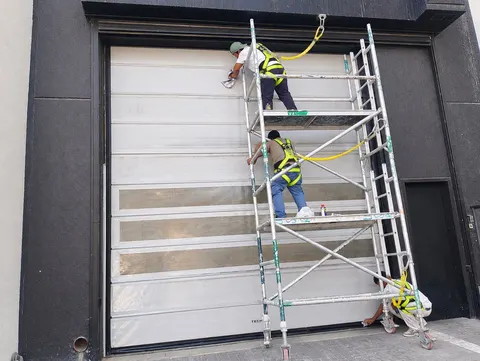
Mount Everest Automatic Doors carried out high speed door maintenance in Al Quoz, Dubai: a three-man team cleaned the panels and vision str…
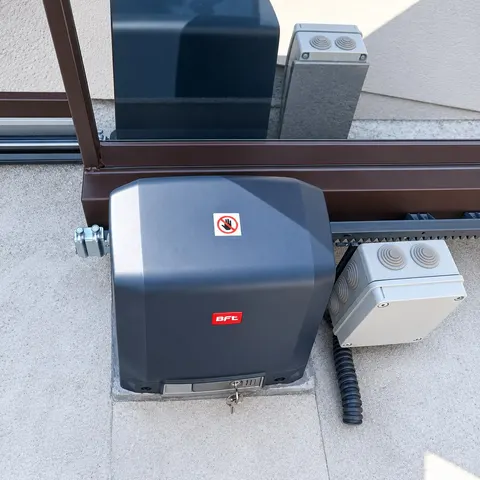
The brown sliding gate of a Jumeirah villa is now automatic. Mount Everest fitted a BFT operator, rack and wiring, with a locked manual rel…
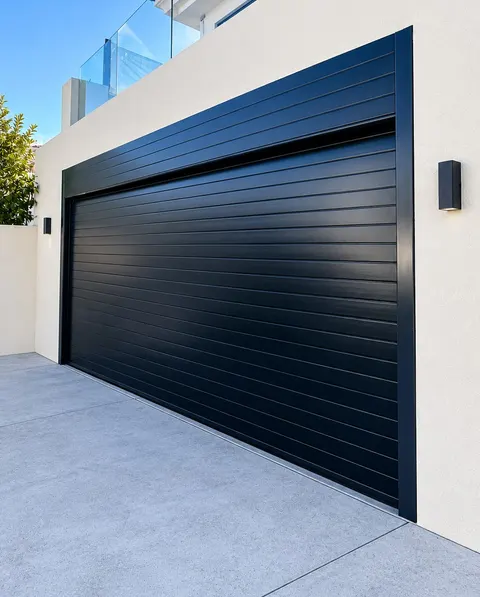
Mount Everest on the details: the slim frame, panel lines and gloss of a black garage door at a Palm Jumeirah villa.
Call, message us on WhatsApp, or leave your number and we will call you.
We call you back