
Short answer: An inductive loop in the surface is the most dependable way to know a vehicle is present, even when stopped, in rain or dust. Radar suits lanes where you cannot cut the ground, but many heads see only motion. A camera adds the plate and identity but needs clean lenses and good light. Ultrasonic works at short range and dislikes wind and rain. Most good lanes use two layers.
In short
- Loop: dependable presence detection, needs a cut in the surface.
- Radar: no ground works, but check whether the head holds a stopped vehicle.
- Camera: identifies the vehicle, but glare and dirt on the lens matter.
- Ultrasonic: short range, sensitive to wind, heavy rain and soft surfaces.
- Detection tells the barrier a car is there. A safety beam still protects the lane as a second layer.
Door or gate giving you trouble?
Call +971 50 494 8667WhatsAppGet a quote
Open 24/7 · Same-day technician · Free site visit
Why does the choice of detection matter?
Detection decides when a barrier opens, when it holds, and when it is allowed to close. If it misses a car, the arm comes down on the roof. If it sees things that are not there, the arm stays up and traffic flows without control, or it opens and closes for nothing. That is why the choice affects false closes and nuisance stops more than the barrier itself does.
We repair barriers at car parks and industrial entrances in Dubai Investments Park, Jebel Ali and Al Quoz, and the lane layout is often the problem, not the barrier. This page compares four detection methods in neutral terms, then shows how to choose for your lane. It does not quote prices. A site visit gives a written quote.
How do the four methods work?
- Inductive loop. A wire loop is laid in a cut in the road surface and connected to a detector. A vehicle's metal changes the loop's field, and the detector sees it. It senses a stopped vehicle as well as a moving one. See our loop detector page and our FAQ on what a loop detector is used for.
- Radar. A small head sends microwaves and reads the return. Many radar heads detect motion, so a car that stops in the beam may be lost. Presence radar heads exist, so ask which type you are getting.
- Camera. A camera with software detects a vehicle in a zone, or reads a plate. It is the only method here that can identify the vehicle. See our ANPR parking systems page and the FAQ on how ANPR cameras work with Dubai car parks.
- Ultrasonic. A sensor sends sound pulses and measures the echo. It detects a stopped object at short range. Temperature, wind and heavy rain affect it, and soft surfaces such as a cloth cover reflect poorly.
How do they compare in the lane?
The matrix gives a qualitative comparison. It is not a ranking. A check mark means the method handles the condition well, a half mark means it depends on the product or the setup, and a dash means it is a weak point.
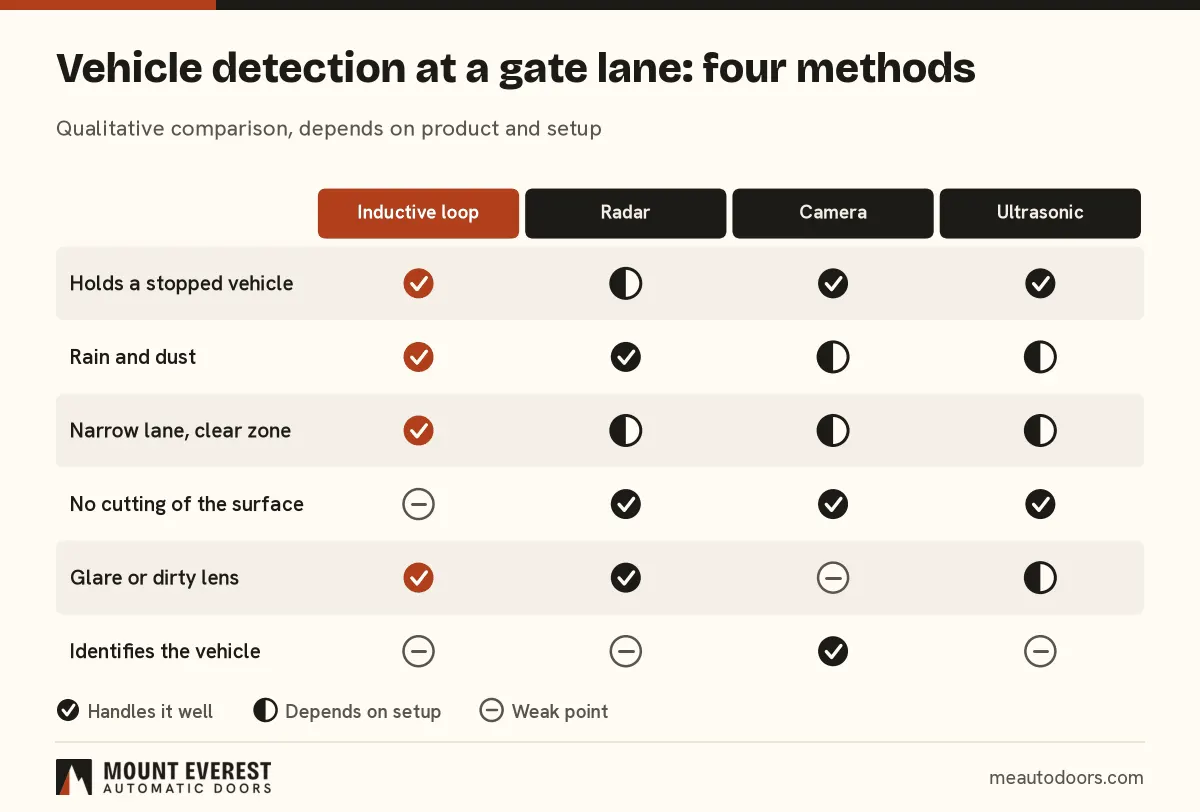
Detection methods at a glance
| Method | Best at | Weak point | Typical use |
|---|---|---|---|
| Inductive loop | Holding the arm up over a stopped vehicle | Needs a cut in the surface and can be damaged by resurfacing | Parking entrances, industrial gates, any lane with a hard surface |
| Radar | No ground works, indifferent to light | Motion-only types lose a stopped car, beam can spill into the next lane | Retrofit lanes, gates where the surface cannot be cut |
| Camera | Identifies the plate or the vehicle | Glare, low sun, dirty or wet lens, poor lighting | Controlled entrances, gated communities, logged access |
| Ultrasonic | Short-range presence, no cutting | Wind, heavy rain, temperature drift, soft surfaces | Low canopies, close-range presence points |
Which suits wet weather, dust and heat in Dubai?
Dubai conditions are mostly dry, so the usual threat is dust and heat, with occasional heavy rain and standing water. Loops are buried and insensitive to light or dust. Radar copes with dust and low light. Cameras need clean lenses and a view that is not blinded by low sun at the start and end of the day. Ultrasonic sensors can drift with temperature and are unhappy with strong wind.
A tarmac surface in strong heat moves, and a cut loop that was fine at the start can crack as the surface ages or is repaired. Where resurfacing is planned, put the loop at the end of the works or plan to renew it. Our FAQ on how long a loop detector lasts covers the limits.
What about narrow lanes and low canopies?
In a narrow lane, the detection zone must stop at the lane edge. A loop is cut to a size and shape, so its zone is clear. A radar beam spreads and may pick up a vehicle in the next bay. A camera is set to a window and ignores what is outside it, but it needs a clear view. Ultrasonic pulses cover a cone and may hit a wall.
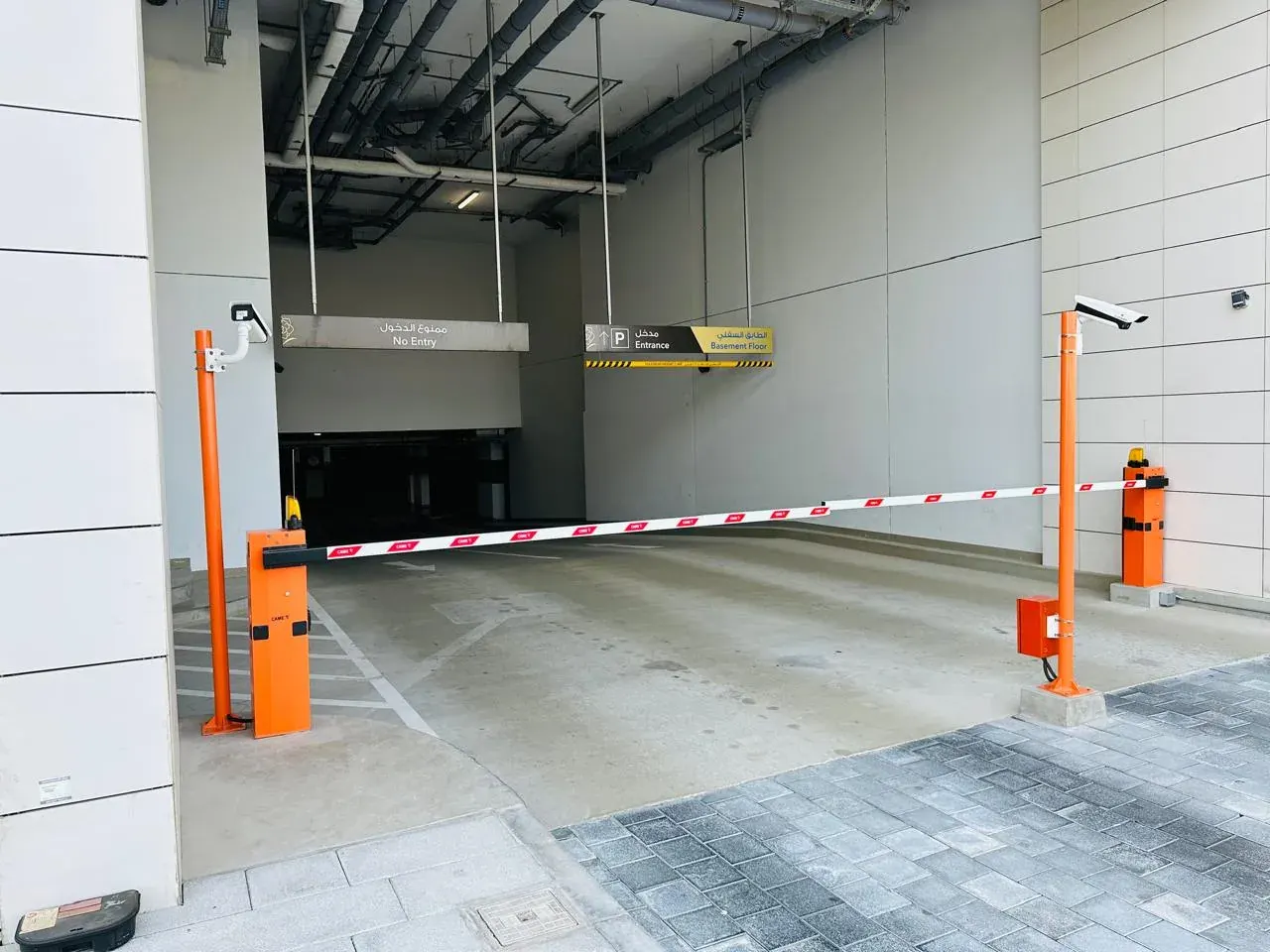
In a basement with a low ceiling, a barrier that sits under a canopy cannot have a head mounted high. In a ramp lane, vehicles may slow and stop on a slope, so presence detection matters more than motion. We choose the method after seeing the lane. Our guide on boom barrier or sliding gate for Dubai parking covers the barrier choice, which then drives where the detection goes.
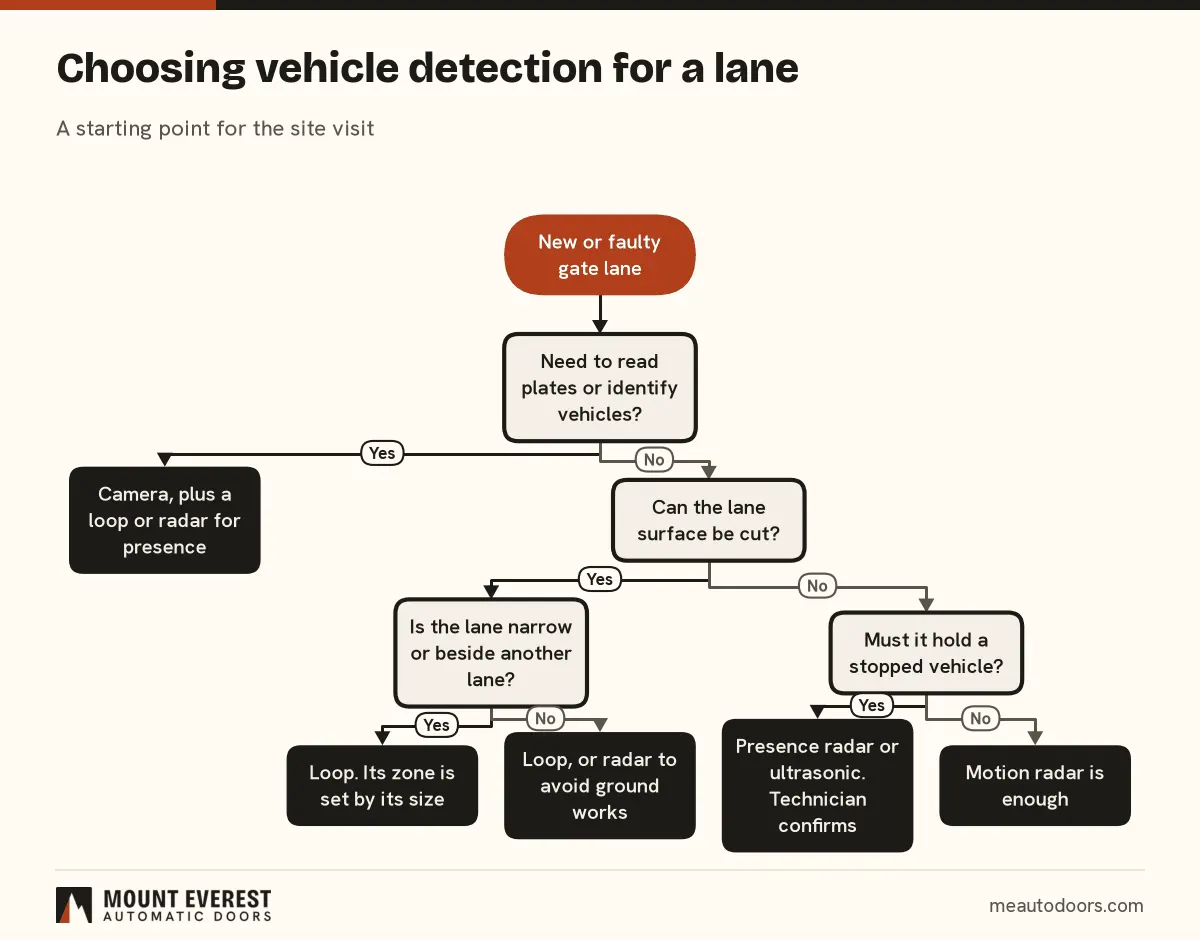
How do I choose for my lane?
Use the tree as a starting point. The technician confirms it on site.
Why use two layers?
Detection says a vehicle is present. A safety beam says something is in the closing path. They do different jobs, and a lane with both is more forgiving than a lane with one. Good practice is a loop or radar for presence and a pair of photocells for the closing zone, with the closing logic set so the arm waits after the vehicle clears. Our FAQ on why a car barrier comes down on vehicles shows what happens when one layer is missing, and our guide on boom barriers that will not close lists the other causes.
For a pedestrian side, fast doors and warehouse entrances use different sensing. See the FAQ on how a fast roll-up door should be triggered for that case.
What should you send us for a detection review?
What to send us
- A photo of the lane from the approach side, showing the barrier, the surface and any markings.
- A photo of the barrier cabinet label and the detector or controller, if visible.
- The lane width, the vehicle types (cars, vans, trucks) and the approach direction.
- Whether the surface is new, old or due for resurfacing.
- What goes wrong now: closes on a car, stays open, opens for nothing.
- The area: Dubai Hills, Dubai Investments Park, Jebel Ali, Business Bay or another site.
How does a visit with Mount Everest work?
Mount Everest Automatic Doors is an installer and service company. We do not make the barriers, loops, radar heads or cameras we fit. Our base is in Al Quoz, Dubai. A technician visits, walks the lane, checks the surface and the cabinet, and tests the present detection. We choose the method with you, and give a written quote after seeing the job. We also fit the safety beams and set the closing logic.
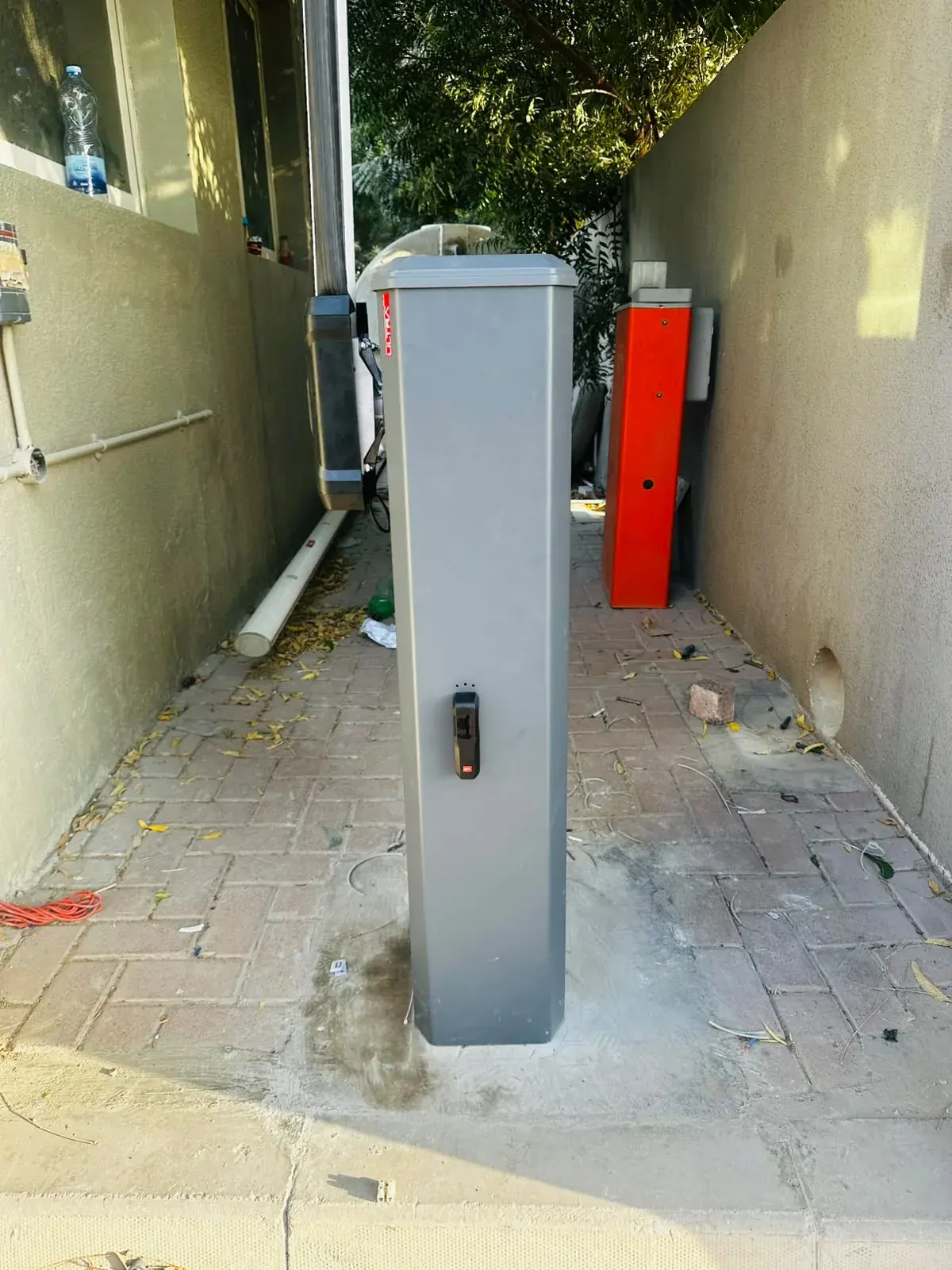
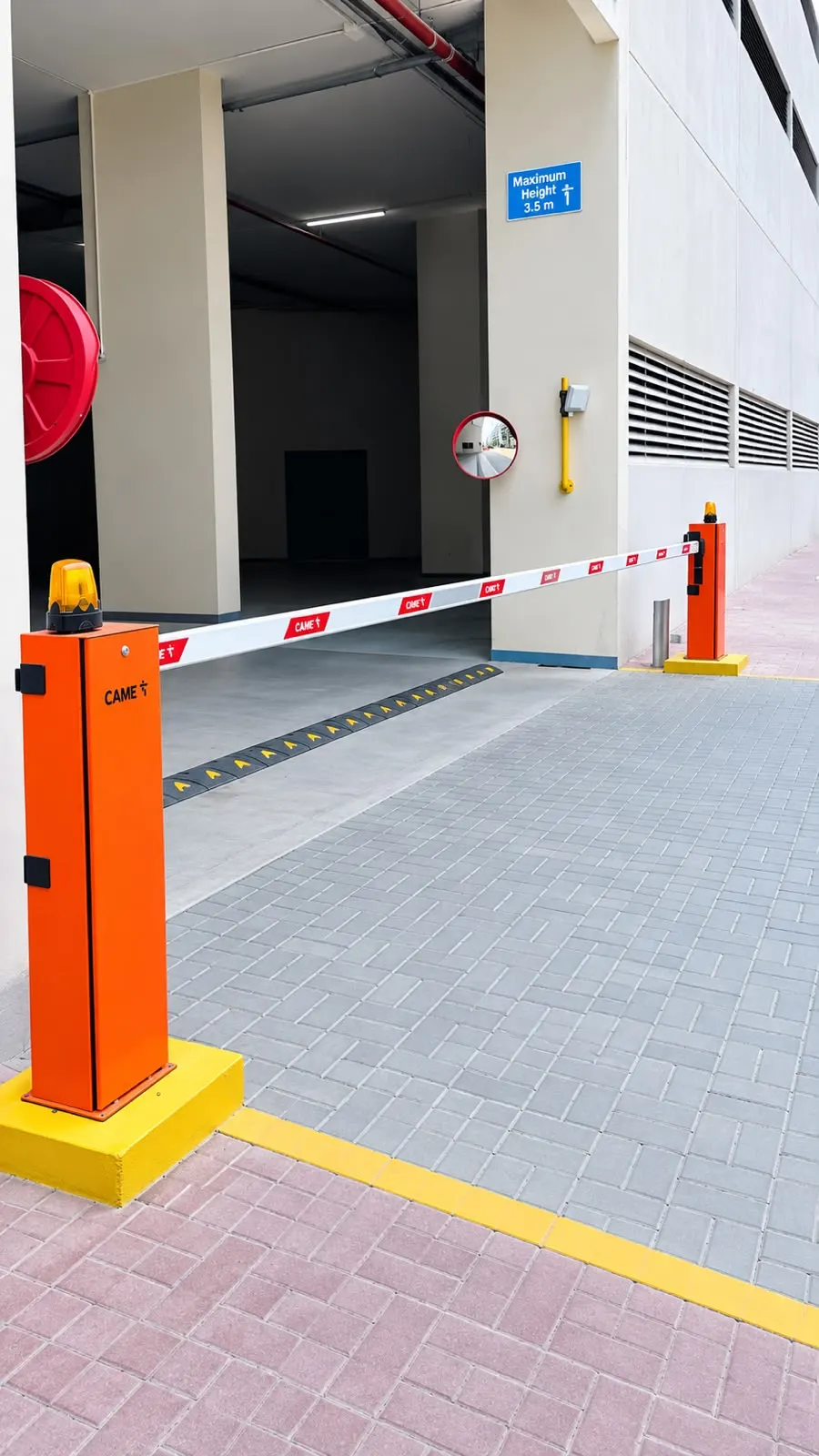
See a recent job: the gate barrier installation in Dubai Hills, a barrier at a basement car park ramp. Another record, the BFT gate barrier installation in Ras Al Khaimah, shows a barrier cabinet on a new base in a narrow lane. See BFT for the brand.
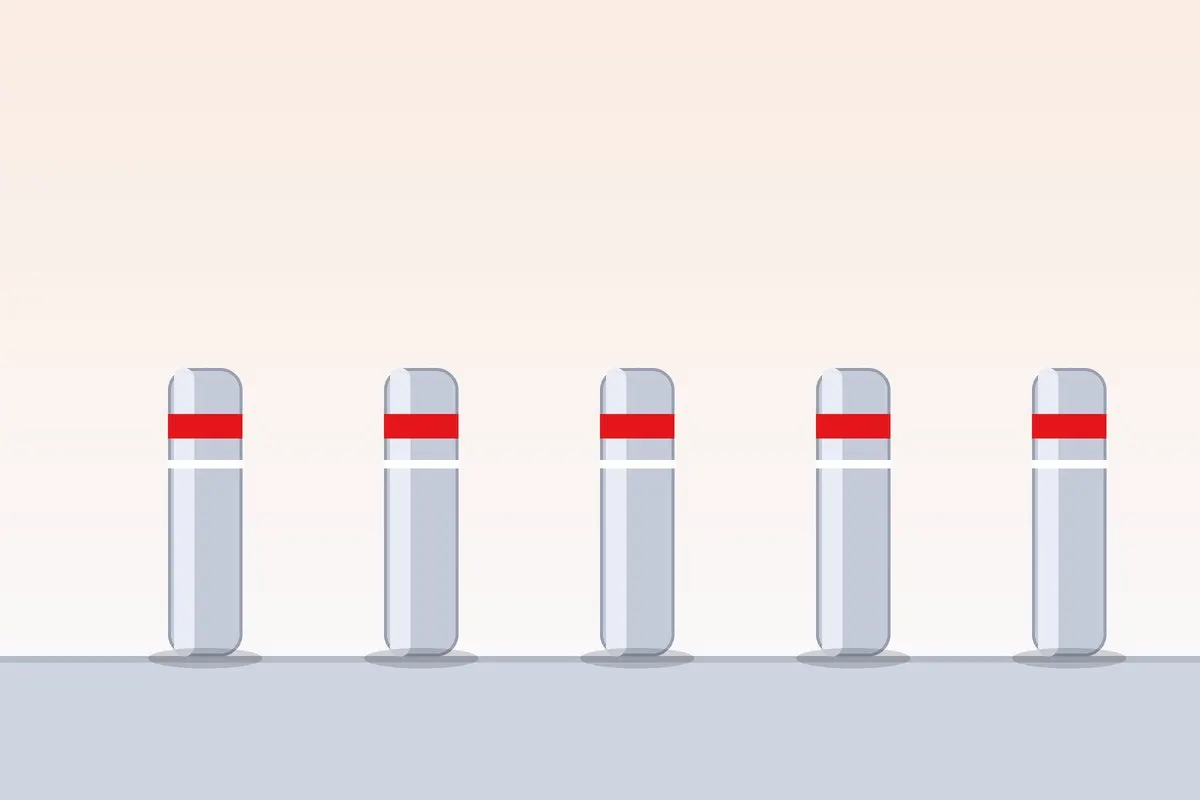
For equipment, see sliding barriers, swing gate barriers and bollards. For service, see boom barrier installation in Dubai, and our guide to parking barrier installation in Dubai.
Frequently asked questions
Which detection method is the most reliable for a car park?
For presence under the arm, an inductive loop is the most dependable in most lanes because it senses a stopped vehicle and ignores weather and light. It needs a cut in the surface. Where cutting is not possible, a presence radar is the usual alternative. Ask which head type is offered, because motion-only radar loses a stopped car.
Can radar replace a loop?
Sometimes. A presence radar head can hold a stopped vehicle and avoids ground works. A motion-only head cannot hold a stopped car, so it is not a loop replacement. Beam spill into the next lane is the other check. We decide after seeing the lane, and we can combine radar with photocells for the closing zone.
Do I need a camera if I only want to open the barrier?
No. A loop or radar can open and hold the barrier without any camera. A camera is added when you need the plate, a record of entries or automatic access for registered vehicles. It adds features and also adds dependence on lighting and a clean lens. Choose it for the feature, not for detection alone.
Does heat damage a loop in the road?
Heat itself does not, but a hot surface moves, and a loop cut in an old, cracked surface can break. Resurfacing, trenching and heavy trucks are the usual causes of loop failure. If the surface is due for repair, plan the loop as part of the works. Our FAQ on loop life gives the details.
Why does my barrier close on a vehicle that is stopped?
Either the loop or radar did not see the vehicle, or the controller closed too early after the detector cleared. A low or small vehicle, a loop that is too small, or a motion-only radar are common reasons. A safety beam is the second layer. A technician tests detection at the exact spot where the car stops.
Is ultrasonic detection used on gates?
It is used at short range, for example to check a space in front of a barrier or a low canopy. Wind, heavy rain and temperature affect the echo, so it is less common as the main detector on an outdoor lane. It can work well under cover. We pick it only where it suits the site.
Ready to review your lane?
Call +971 50 494 8667 or use the quote form. Send photos of the lane and the barrier label through send a photo, or book a site visit. We work in Dubai first and book jobs in other emirates by appointment. We give a written quote after seeing the job, and we do not guess prices.
Want this done properly?
Send a photo of your door or gate and we will tell you what we see.
Call +971 50 494 8667WhatsAppGet a quote
Open 24/7 · Same-day technician · Free site visit