Big 5 Global 2026 Dubai: High Speed Door Kit We Installed
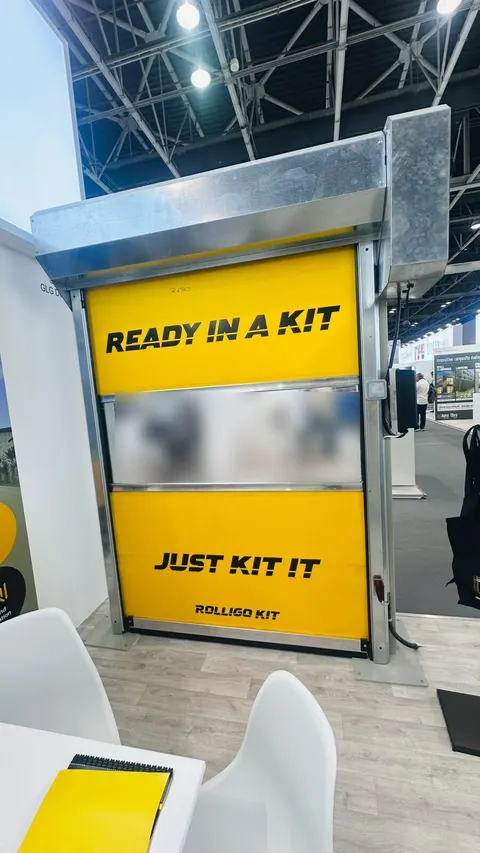
Mount Everest Automatic Doors installed this kit high speed door, the GLG Rolligo Kit, on the Italian pavilion at Big 5 Global 2026, Dubai …
DubaiMon,Tue,Wed,Thu,Fri,Sat 09:00 to 18:00
Dubai
Professional mantrap & security doors install by Mount Everest Automatic Doors in Dubai. Free site visit and a written quote.
Mount Everest Automatic Doors handles mantrap door installation across Dubai: supply, fitting and testing, planned around each site.
About Mantrap & Security Doors. Components involved in mantrap & security doors include interlock controller, electric / magnetic lock, door operator, card + biometric reader, single-occupancy / weight sensor and anti-piggyback sensor. High-security interlocking mantrap portals and reinforced doors that stop tailgating at banks, data centres and vaults. In Dubai the right choice depends on the opening itself, which is why we look at it on site first.
Within Dubai we regularly list localities such as The Lakes, Dubai Knowledge Park, Dubai Maritime City, The Greens, Dubai Islands and The Views. Call or WhatsApp with the address and what you need. The written quote follows the free site visit.
Safety firstDo not force a moving gate or a door held by a spring, and switch off the power before you look at an opener. Springs and motors can injure.
An automatic mantrap door is a small secure compartment with two interlocked doors: the outer door must close and lock before the inner door can open, and the system checks who is inside before it lets anyone through. It stops the most common breach in a secured room, the person who walks in behind an authorised colleague. In Dubai, mantraps are used at data centre halls, bank cash rooms and vaults, laboratories, control rooms, pharmacies with controlled stock and other high risk rooms in towers and free zone buildings. A mantrap can be a vestibule built from two automatic or manual doors with an interlock controller, a round security portal, or a single occupancy booth with weight or optical sensing. We survey the space, the people flow and the risk, then plan the doors, readers, sensors, fire release and the link to your access control system. The brand listed for these portals on our site is Automatic Systems. You receive a written proposal after the survey.
A two door vestibule uses the space you already have: two doors, sliding or swing, with an interlock so only one opens at a time. It suits data halls, labs and back of house corridors. A round security portal is a self contained cylinder that rotates or slides open on one side at a time, which suits lobbies and banks where space and appearance matter. A single occupancy booth adds sensing that confirms one person only, for the highest risk rooms. The choice depends on the room, the number of people per hour and the level of checking needed.
Interlocked doors alone stop a second person only if they cannot squeeze in together. Anti tailgating needs sensing: a weight sensing floor, optical or 3D sensors that count people in the compartment, or both. If two people are detected, the inner door stays locked and the system can release the person back out and alert security. The sensing level is set during commissioning to match how the room is used, for example allowing a trolley but not a second person.
The outer door usually opens on a card, tag or PIN, and the inner door on a second factor such as a fingerprint or face reader, so a stolen card is not enough. Readers connect to your existing access control system or to a standalone controller. We plan where each reader sits, how the doors behave on a denied credential, and what the security desk sees, and we coordinate with your access control or IT team on the integration.
A mantrap must never trap people in a fire or a power cut. The doors are wired to release on a fire alarm signal and have local emergency release devices, and the controller's behaviour on power loss is set as part of the design. Dubai Civil Defence requirements and the building's fire strategy may apply, so we coordinate with the building's consultant or the authority before work starts. Checking this early avoids changes after installation.
Typical sites are data centre halls and meet me rooms, bank cash centres and vaults, laboratories and clean rooms, server rooms in office towers, airport and logistics secure areas, and high value stores. In a free zone or tower, the landlord or facility manager usually sets rules for working hours, permits and noise, so we plan installation with them.
Work starts with a survey of the opening, the floor, power, cable routes and the access control system. Doors and frames are installed, the interlock controller, sensors and readers are wired, and the system is tested with the security team, including fire release and denied entry cases. Mantraps are used many times a day, so a maintenance contract with regular checks of door operators, locks, sensors and emergency release is strongly advised.
| Form | How it works | Typical place |
|---|---|---|
| Two door interlock vestibule | One door at a time, credential check between | Data halls, labs, back of house |
| Round security portal | Self contained cylinder, opens one side at a time | Banks, lobbies with limited space |
| Single occupancy booth | Weight or optical sensing confirms one person | Vaults, highest risk rooms |
| Anti tailgating door with sensors | Detects a second person without a full booth | Offices with moderate risk |
It is a small secure compartment with two interlocked doors. The outer door must close and lock before the inner door opens, and readers and sensors check who is inside first. It stops tailgating, where an unauthorised person follows someone with a valid card into a secured room.
Mainly at data centre halls, bank cash rooms and vaults, laboratories, server rooms, control rooms and high value stores, in office towers, free zones and industrial sites. Any room where one wrong person inside is a serious risk can justify interlocked entry.
With sensing inside the compartment, such as a weight sensing floor or optical sensors that count people. If more than one person is detected, the inner door stays locked and the person can be released back out while security is alerted. The sensitivity is set during commissioning.
It must be. The doors are wired to release on a fire alarm signal and have emergency release devices, and the power loss behaviour is designed in. Dubai Civil Defence requirements may apply, so check with the building's consultant or the authority; we coordinate this before installation.
Usually yes. The readers and the interlock controller can work with your existing access control system or a standalone controller. We confirm the interface with your access control or IT team during the survey.
A turnstile or speed gate controls one person at a time in a lobby but does not enclose them. A mantrap encloses the person between two locked doors and checks identity and occupancy before the inner door opens, so it gives a much higher level of security for a single room.
Mount Everest Automatic Doors installed this kit high speed door, the GLG Rolligo Kit, on the Italian pavilion at Big 5 Global 2026, Dubai …
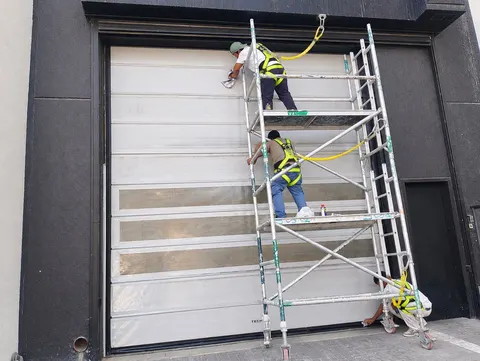
Mount Everest Automatic Doors carried out high speed door maintenance in Al Quoz, Dubai: a three-man team cleaned the panels and vision str…
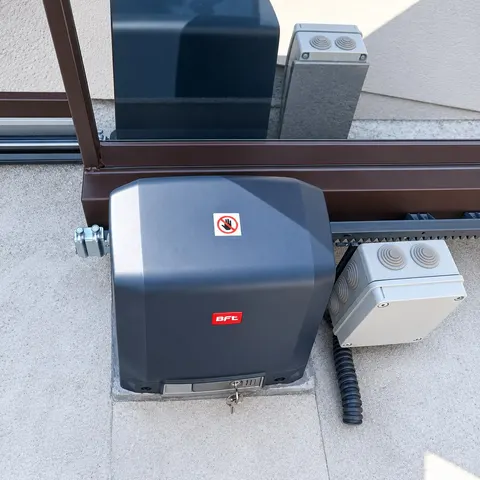
The brown sliding gate of a Jumeirah villa is now automatic. Mount Everest fitted a BFT operator, rack and wiring, with a locked manual rel…
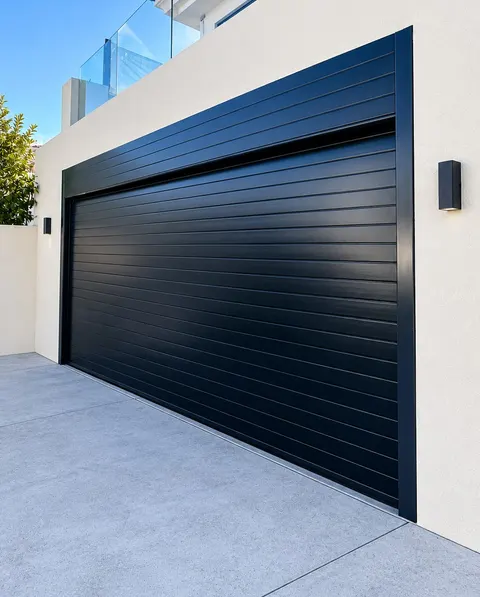
Mount Everest on the details: the slim frame, panel lines and gloss of a black garage door at a Palm Jumeirah villa.
Call, message us on WhatsApp, or leave your number and we will call you.
We call you back