
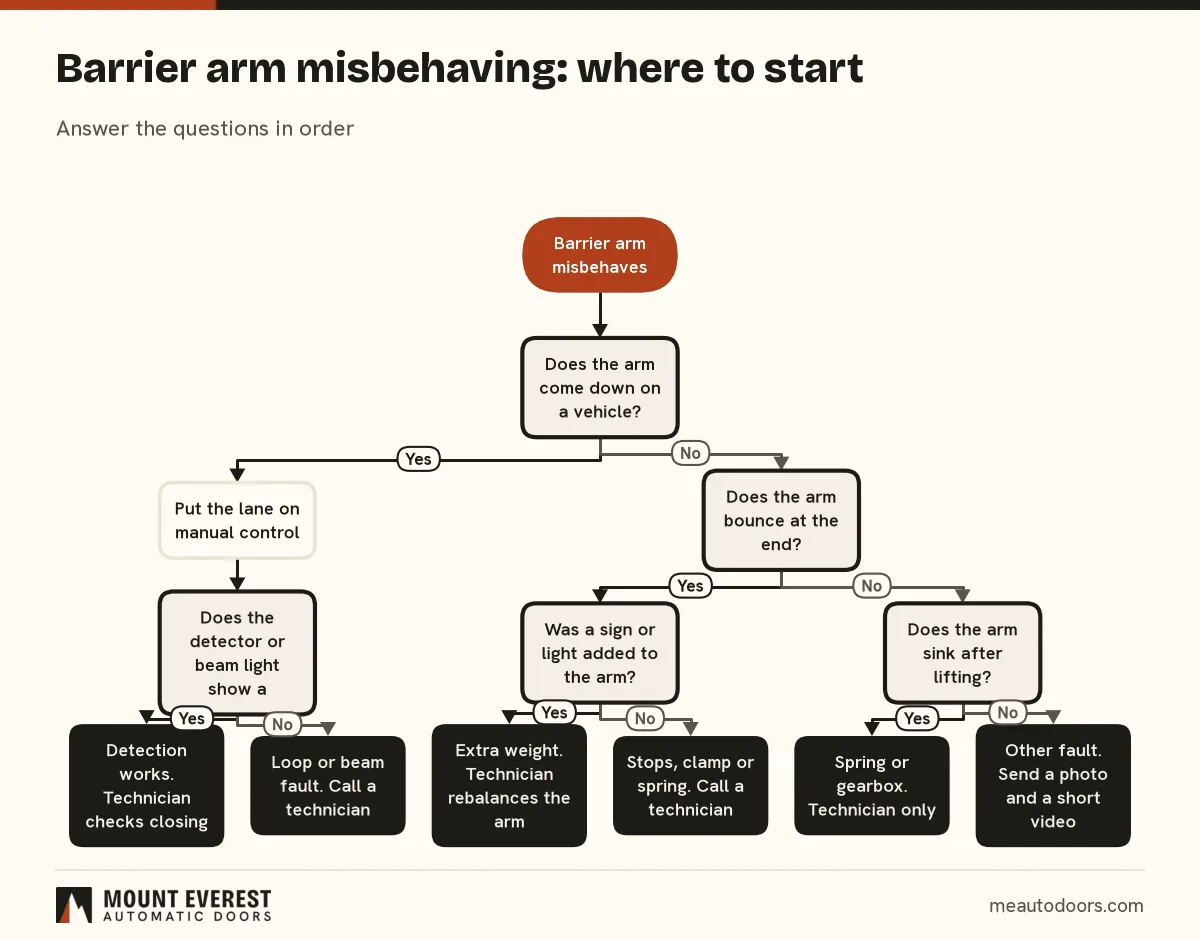
Short answer: A boom barrier arm that bounces at the end of its travel usually has an end stop, balance or loose clamp problem. An arm that drifts down after lifting points to the balance spring or the gearbox holding. An arm that comes down on a car is a detection problem: the loop detector, the safety beam or the closing logic. Follow the questions below, then call a technician before opening the cabinet.
In short
- Bounce at the end of the stroke: look at the end stops, the balance and the arm clamp first.
- Drift or creep after the arm lifts: the balance spring or the gearbox, and both are technician work.
- Arm lowering on a vehicle: switch the lane to manual control and have the detection layer checked.
- Anything added to the arm (sign, lights, skirt) changes the balance and must be allowed for.
- Never open the cabinet to adjust the spring yourself. The spring stores energy.
Which symptom do you have: bounce, drift or arm on the car?
Parking operators in Dubai Investments Park, Jebel Ali and Al Quoz tell us the same thing: the barrier is not dead, it is misbehaving, and the queue grows anyway. Three symptoms cover most call-outs, and each one points at a different part of the barrier. Work through the tree first. It takes two minutes and it tells you what to say on the phone.
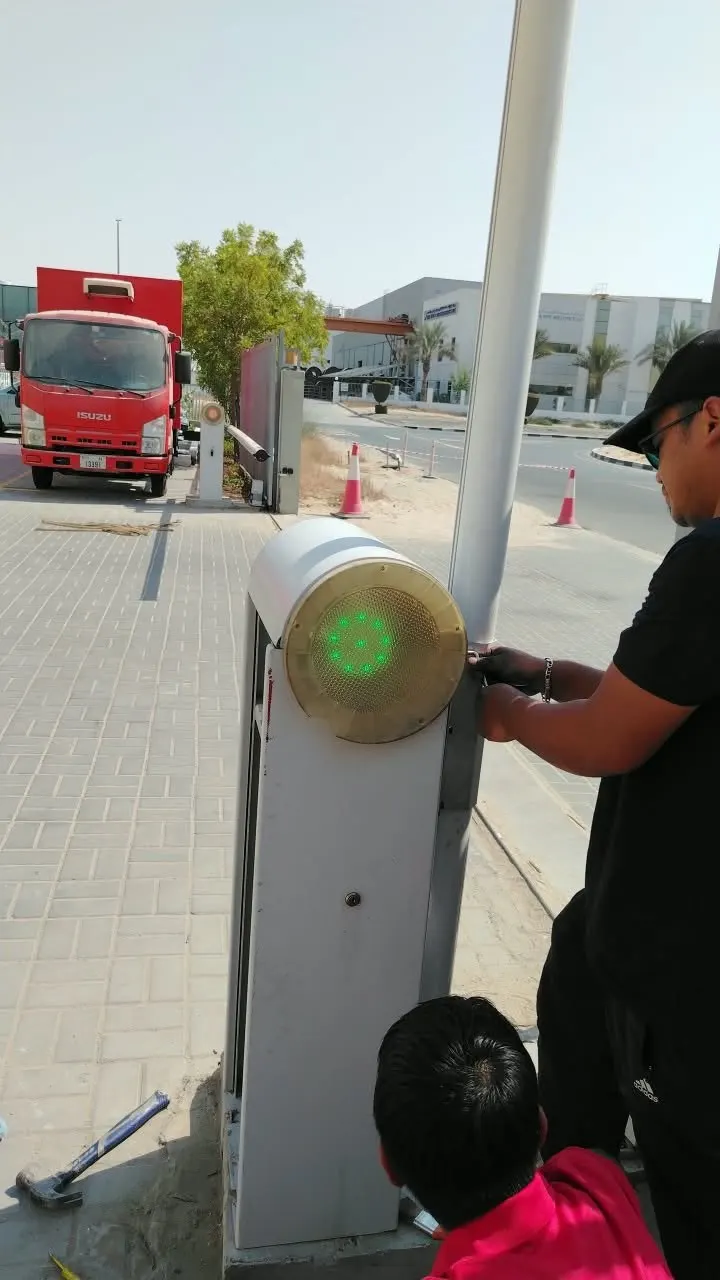
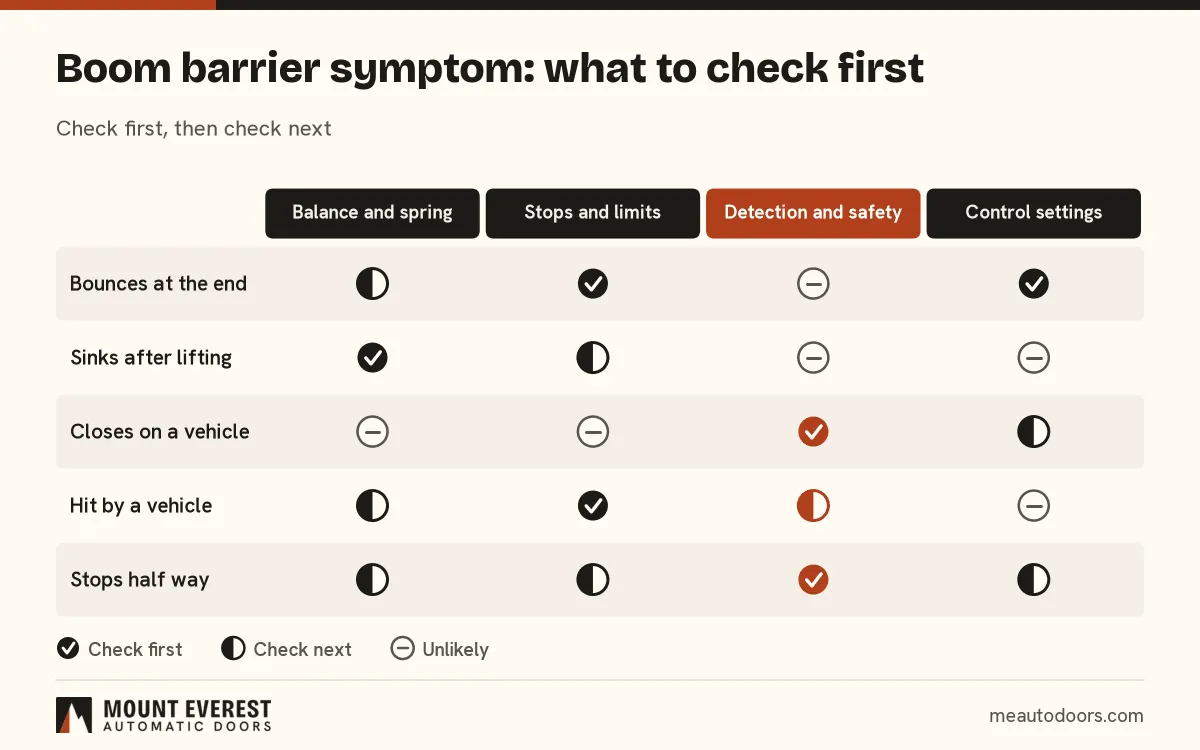
Symptom, likely cause, what to do
| Symptom | Likely cause | What to do |
|---|---|---|
| Arm bounces up and down at the closed or open position | End stop out of place, deceleration set too short, loose arm clamp, extra weight on the arm | Note when it started and what changed. Technician adjusts stops and balance |
| Arm lifts then slowly sinks | Tired balance spring, gearbox or brake not holding the load | Stop using automatic mode in busy hours. Technician only |
| Arm closes while a car is under it | Loop detector or beam not seeing the vehicle, or a close timer that is too short | Switch to manual control for the lane. Technician checks detection |
| Arm hits cars that follow close behind | Tailgating through the loop zone, safety beam too low or too far from the boom | Add a safety layer. Technician reviews positions |
| Arm stops half way and reverses | Safety input triggered by dirt, a bent arm or a loose wire | Wipe the beam lenses. Send us a photo if it repeats |
Why does the barrier arm bounce at the end?
A bounce is the boom rebounding off a hard stop, or the motor decelerating too late. The arm is a long lever, so a small error at the pivot becomes a large movement at the tip.
- End stops. The mechanical stop or the electronic limit has moved. Vibration and a knock from a vehicle are the usual reasons.
- Deceleration. Many controllers slow the arm for the last part of the stroke. If that setting is short, the arm arrives at speed and rebounds.
- Arm clamp. The arm sits in a clamp on the drive shaft. If it loosens, the arm can flex on its own mounting after the motor has stopped.
- Added weight. A sign, a skirt or lighting strip changes the balance. A barrier set up for a bare arm may bounce when a heavy accessory is bolted on later.
Our shorter answer on why the arm bounces or creeps at its stop covers the same point for the parts list. The brand matters here, because deceleration and limits are set differently on each controller. We see this on FAAC, CAME and Nice units, and the fix is a setting or a clamp rather than a new barrier in most cases.
Why does the arm drift down or sink after it lifts?
Most boom barriers use a spring to balance the arm, so the motor only has to move a small difference in load. When the spring tires, or the gearbox cannot hold the arm, the boom creeps down by itself. Heat adds to it. A cabinet standing in direct sun all afternoon in Jebel Ali runs hot, and lubricants and rubber parts do not like that.
You can tell the two causes apart by hand. With the barrier powered down and the arm released by the technician, a balanced boom stays where you leave it at mid height. An unbalanced one falls or rises. That test is also how we set the spring. Do not do it yourself: a spring under tension can release suddenly.
Why does the barrier come down on a car?
A barrier closes on a car when nothing told the controller the car was there, or when something told it to close too early. There are three layers, and a healthy lane has all three.
- Presence detection. An inductive loop in the surface, or a radar or camera, keeps the arm up while a vehicle is under it. See our loop detector page for what a loop does.
- Safety beam. A photocell pair across the lane stops the arm and sends it back up. Dirt, a bent bracket or a misaligned lens blinds it.
- Closing logic. After a vehicle clears the loop the controller can close at once or after a short pause. A pause that is too short, combined with a slow driver, is a classic near miss.
Our FAQ on why a car barrier comes down on vehicles adds the loop-specific causes. If the arm has already struck a vehicle, read whether a knocked arm should be repaired or replaced before you reset anything.
What can you check yourself, and when should you stop?
You can check the outside of the lane and the lenses. You should not touch the spring, the gearbox or the cabinet wiring.
- Look at the arm. Is it straight, and is the clamp tight with no gap at the shaft?
- Wipe both photocell lenses with a soft cloth. Check nothing is stuck to them.
- Check what is attached to the boom. If a sign or light was added recently, tell us.
- Watch one full cycle with a spare person at a safe distance. Does the bounce happen on opening, closing or both?
- Look at the loop area. Fresh cracks, resurfacing or a patched cut can break a loop.
Stop and call a technician if the arm sinks by itself, if it has hit a vehicle, if it is bent, if you hear grinding from the cabinet, or if the lane is open to the public. Put the lane on manual control or post a person at the barrier until we have been.
What should you send us for a barrier call-out?
A short, clear message saves a wasted trip and lets the technician bring the likely parts. Send the details below by WhatsApp or through the photo form at the end of this page.
What to send us
- A photo of the whole barrier, the arm and the lane, taken from the vehicle side.
- A close photo of the controller or cabinet label (brand and model).
- A short video of one open and close cycle that shows the bounce, drift or contact.
- The arm length if you know it, and a list of anything attached to the arm.
- Where it is: Dubai Investments Park, Jebel Ali, Al Quoz, a tower basement or a residential lane.
- Whether any vehicle was struck and whether the lane can be closed while we work.
How does a visit with Mount Everest work?
Mount Everest Automatic Doors is an installer and service company. We do not manufacture the barriers, loops or controllers we fit. Our base is in Al Quoz, Dubai. A technician visits before anything is replaced, listens to the symptom, watches a test cycle, opens the cabinet and checks the board, wiring, limits, balance and safety devices. Then we explain what we found, give a written quote for any parts, and run repeated cycles before we leave.
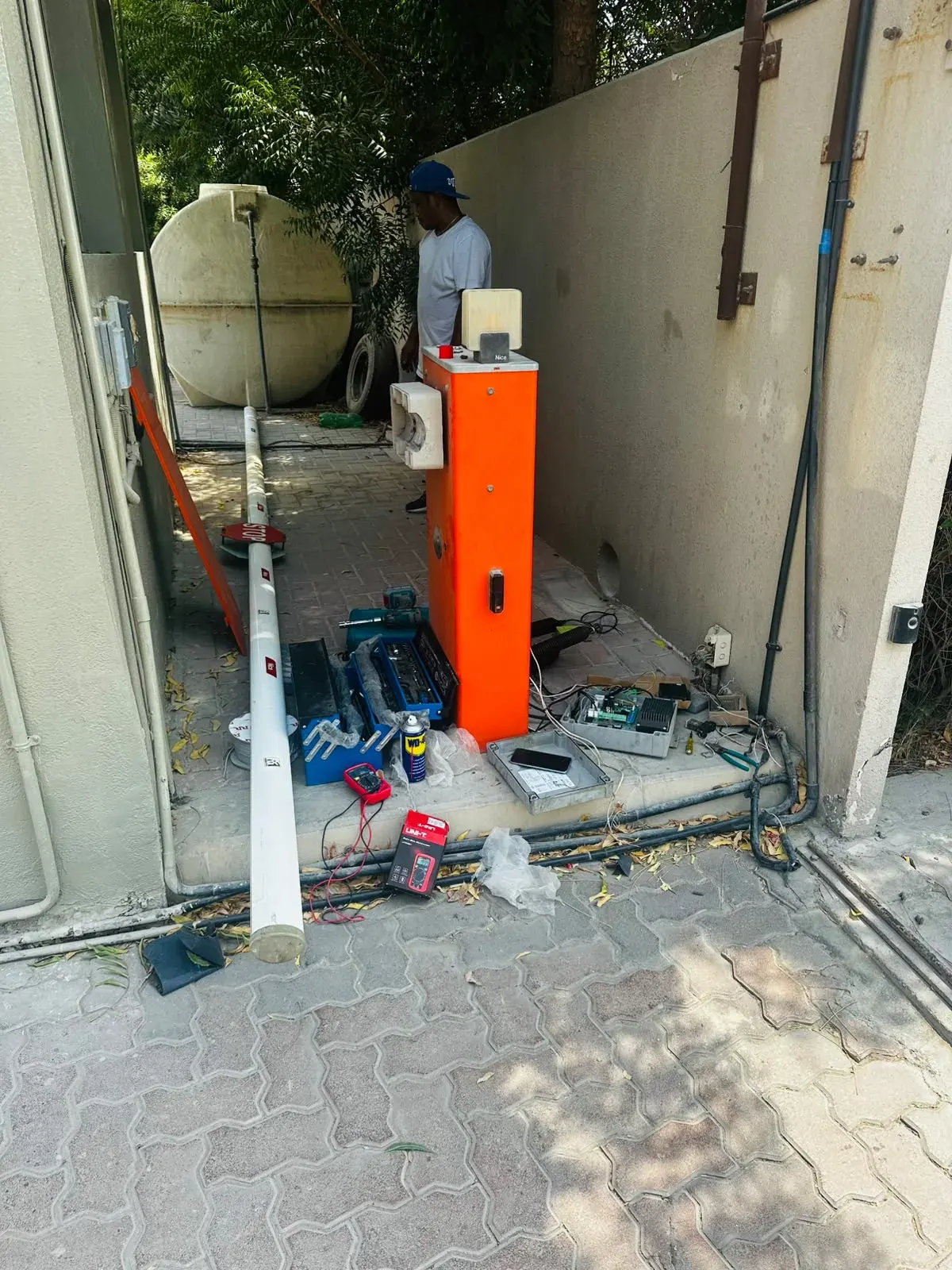
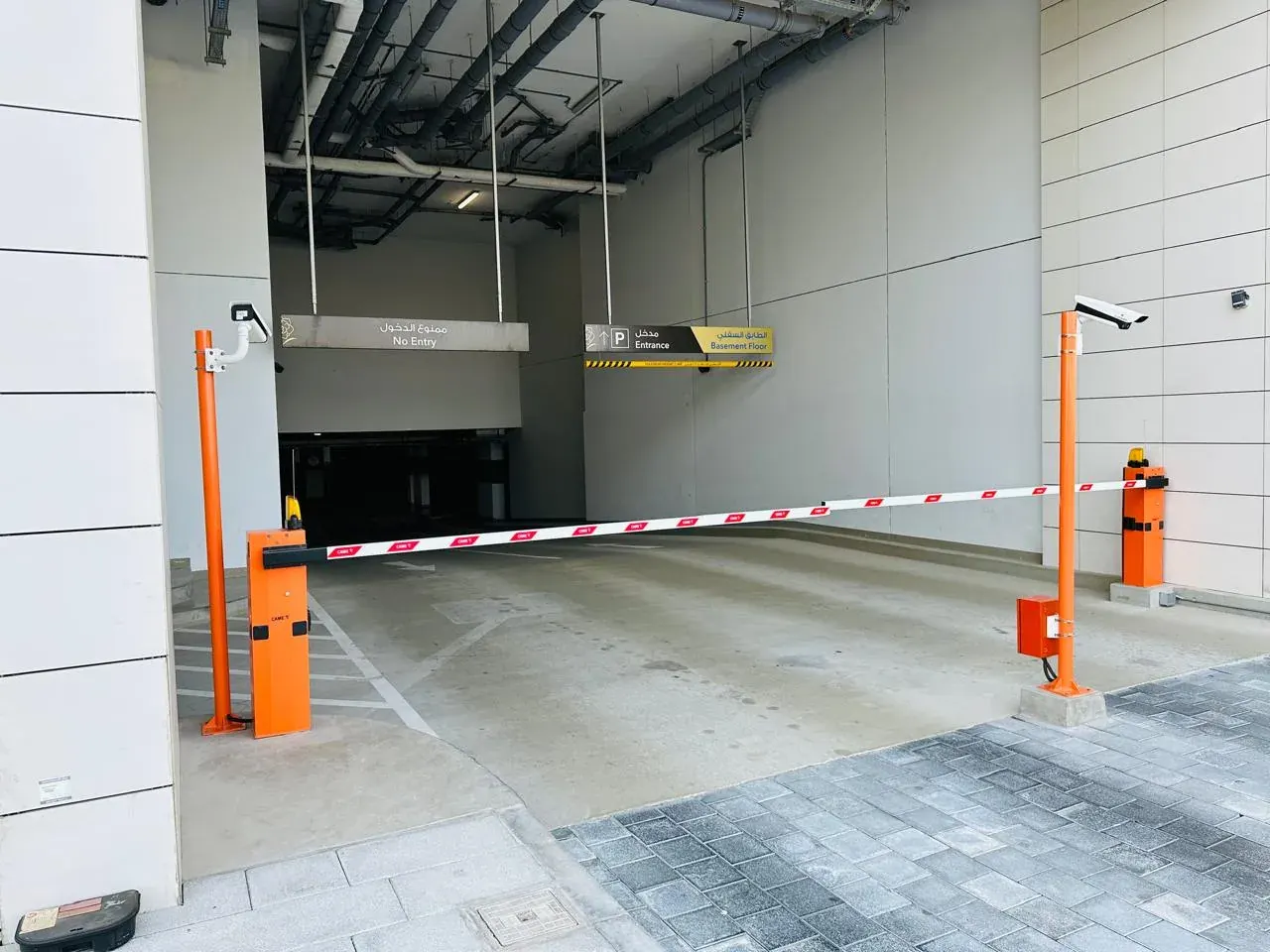
See a recent job: the gate barrier repair in DIP 1. The record describes a stuck barrier at a busy entrance, with the fault found, parts repaired, lamp and safety devices confirmed and repeated cycles run. For a new lane, see the gate barrier installation in Dubai Hills, a barrier at a basement car park ramp.
For the equipment, see our sliding barriers, swing gate barriers and bollards. Our boom barrier page lists the service, and boom barrier repair in Dubai shows how we cover the city. A plain-language overview is in our guide to boom barriers that will not close.
Frequently asked questions
Is a barrier that bounces dangerous?
It can be. A bouncing arm means the stops or the balance are out, and the same fault can let the boom swing into a vehicle or a person. Keep people away from the lane edge, switch to manual control during busy hours, and book a check. A bounce that appeared after something was fitted to the arm is easy to fix once the balance is reset.
Can I stop the arm drifting by tightening something?
No. Drift comes from the balance spring or from the gearbox, and both involve stored energy and calibrated settings. Tightening a bolt on the outside does not change either. A technician releases the arm, checks the spring and sets the balance with the arm at mid height. That visit is the safe route.
Why did the barrier close on my car when I was waiting?
Most often the loop did not see the car, or the beam was blocked, dirty or misaligned. A low car, a stopped car on the edge of the loop and a worn cut in the surface are common reasons. Report the exact spot where the car stood so we can test the detection at that point.
Does extra weight on the arm matter?
Yes. A sign, a skirt or a light strip adds weight at the tip of a long lever. The spring was set for the bare arm, so the barrier may bounce, close slowly or drift. Tell the technician what you have added, and we will balance the arm for the load it carries.
Will heat in Dubai make a barrier misbehave?
It can add to a problem that is already there. Direct afternoon sun on the cabinet raises the temperature around the board and the motor. Dust and humidity add to wear on limits and contacts. We look for shade, ventilation and clean seals during a service, but heat alone rarely causes a bounce.
Is a bent arm worth straightening?
Usually not. A bent aluminium arm weakens at the kink and its balance changes, so it may fail again. Replacing the arm is often simpler and safer. If the barrier was struck, check the clamp and the shaft too, because the impact can loosen them. Our FAQ on knocked arms has the details.
Ready to get the lane working?
Call +971 50 494 8667 or use the quote form. Send a photo of the barrier and the cabinet label through send a photo, or book a site visit. We work in Dubai first and book jobs in other emirates by appointment. We give a written quote after seeing the job, and we do not guess prices.
Want this done properly?
Send a photo of your door or gate and we will tell you what we see.