
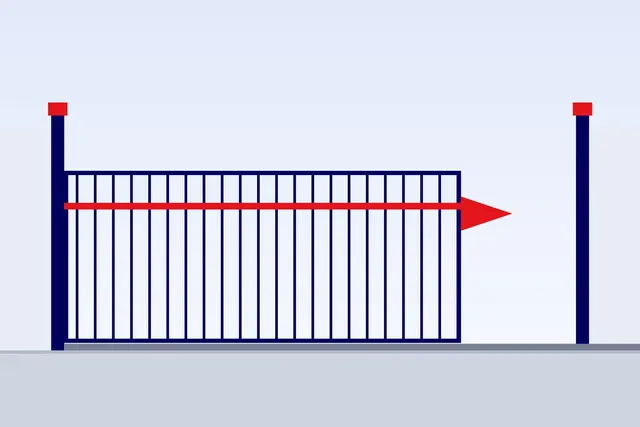
Automatic Sliding Gates
Made-to-measure automatic sliding gates for villas, compounds and industrial yards, with a quiet motor, photo…
DubaiMon,Tue,Wed,Thu,Fri,Sat 09:00 to 18:00


Bollards
Bollards Dubai sites rely on for parking, perimeter security and traffic control: fixed, removable and automatic hydraulic or electromechanical posts, installed and serviced.
No fixed price is shown because the quote depends on the opening and the site. We quote in writing after a visit or a photo review.
Bollards in Dubai protect pedestrians, shopfronts, plant and parking bays from vehicles, and they can be fixed, removable or automatic. The right type depends on the traffic, the ground and who needs access. A free site visit checks underground services before a written quote.
Choosing bollards Dubai sites can live with for years is less about the steel post and more about what sits around it: the sand, the salt, the delivery vans and the people who must be able to drive in when the system says no. Mount Everest Automatic Doors supplies, installs and repairs fixed, removable and automatic bollards across Dubai, from tower podiums to warehouse yards. This page explains the types, the drive units, the site details that decide success and the mistakes we are asked to fix later.
A bollard is a short vertical post that controls where vehicles can go. In practice the word covers three very different products, and the first job on any enquiry is to decide which one you need. A fixed bollard never moves and simply blocks a line. A removable bollard lifts out of a ground socket so authorised staff can open the way for a service vehicle or an event. An automatic bollard rises and lowers by itself, driven by a hydraulic or electromechanical unit and triggered by a card, a remote, an intercom or a number-plate reader.
In Dubai the choice is shaped by use. A retail podium in Downtown Dubai needs a clean look and occasional delivery access. A logistics yard in Jebel Ali needs posts that are tough enough to be struck now and then. A residential community needs a gate that works at 3 a.m. for an ambulance. Each case points to a different mix of fixed, removable and automatic posts on the same plan.
Fixed bollards are the quiet workhorses. They protect shopfront glass, pipework, fire hydrants, electric vehicle chargers, plant rooms and pedestrian walkways. They are usually set into a concrete footing, with a sleeve or core that carries the load, and finished in stainless steel, painted steel or a polymer cover for lighter duty. Because nothing moves, there is nothing to service apart from the finish, which makes them the right answer wherever a path is never meant to open.
Removable bollards add flexibility. The post drops into a socket flush with the paving and is held by a key lock. When it is lifted out, the socket is capped so heels, wheels and sand do not enter. Good removable posts are light enough for one person and are stored somewhere sensible, which is the part people forget. A post that nobody can find on the day of a move-in defeats the purpose, so we always discuss where the posts live and who holds the key.
Between fixed and fully automatic sit folding posts that lay flat on a hinge, and manual telescopic posts that slide down into the ground. They suit a private car park where one or two owners share a space, or a villa forecourt where a motor is not justified. They are also the simplest answer to parking bays that need to be reserved, a topic covered further under parking locks and space savers.
An automatic bollard is a cylinder that retracts into a pit below the road surface and rises again on command. It is the tool of choice when a street or ramp must be open to some vehicles and closed to others, all day, without staff standing there. The decision to move from fixed to automatic should follow a simple test: how many times a day does the way need to open, and who opens it?
Automatic bollards Dubai facilities use typically work with an access control reader, a loop detector in the road, a photocell, a traffic light and a control panel that ties them together. The detail matters more than the post. A pit with poor drainage will flood in a summer storm. A loop buried in the wrong place will miss a motorbike. A missing safety sensor can let a post rise under a vehicle. Our bollard services page shows how the work is arranged from survey to handover.
Hydraulic bollards use oil, a pump and a cylinder to lift the post. They are smooth, can handle heavy posts and are well suited to frequent cycles, but they bring pipes, seals and an oil reservoir that must stay clean. Electromechanical bollards use an electric motor and a gearbox or screw to do the same job. They are cleaner, with no fluid to leak, and are often easier to service, although the very heaviest duty posts still tend to favour hydraulics.
The same trade-off is discussed for barriers in our guide on hydraulic and electromechanical drives. Whichever you choose, ask the installer how the post behaves in a power cut. A post that stays up in a blackout may strand residents, while one that drops may open the site. Battery backup or a manual release is part of the specification, not an extra.
Parking bollards are the most common request in towers and malls. They reserve a bay for a tenant, keep delivery vans out of a drop-off lane, or separate pedestrian routes from a ramp. Folding posts and lock-down units work for single bays. For a whole lane, an automatic post linked to a ticket machine or a reader makes more sense, often alongside a boom barrier on the main entrance.
For traffic control on longer routes, think in layers. A barrier stops general entry. Bollards keep vehicles from bypassing the barrier across a kerb or a landscaped island. Signs and lights tell the driver what is happening. Our guide to boom barriers versus bollards explains when each belongs, and the longer parking barrier and bollard systems guide walks through typical layouts for Dubai car parks.
Perimeter security is where bollards earn their cost. A line of posts along a glass frontage keeps a reversing vehicle from entering a lobby. Posts at a plaza edge keep cars out of a pedestrian zone. Posts around a data hall, a fuel point or a jewellery store give a visible and physical boundary that gates alone cannot.
Some projects ask for crash-rated products, tested to a published standard against a vehicle of a given weight and speed. We do not make rating claims on this page. If your consultant or insurer requires a specific test certificate, tell us at the start so the product, the foundation depth and the sub-base are checked against the manufacturer data. A crash-rated post depends heavily on the foundation, and a good product on a shallow slab can fail to perform as intended. Dubai Civil Defence requirements for fire exits and access may apply to bollards on emergency routes, so check with the building consultant or the authority before fixing anything across a fire lane.
Dubai is hard on moving parts. Summer temperatures above 45 C bake hydraulic oil and warp cheap covers. Humidity on the coast and salt air at the Marina, JBR, Palm Jumeirah and Dubai Creek Harbour attack mild steel and unprotected fasteners, so finish and fixing grade are worth paying attention to. Fine desert sand settles in pits and works its way into seals, and flash rain can fill a pit in minutes if the drain is blocked.
These conditions suggest a few habits. Specify a corrosion-suitable finish for coastal sites. Keep pits drained and covered. Ask for a cleaning and inspection routine, which many clients lock in through a maintenance contract. For more on dust, our note on sand and dust protection applies equally to bollard pits, and the guidance on flash flood protection is worth reading before you finalise drainage.
Common installations include tower podiums and valet lanes in Business Bay, waterfront promenades near Dubai Marina, villa communities where a service lane is closed to visitors, hospital and school drop-off zones, and industrial yards in Al Quoz and Jebel Ali. Tenants should remember that fixing posts to a building or road usually needs landlord approval, and approvals may be needed from your community management or the authority, so ask early rather than after the pit is cut.
You can also read our write-up on smart bollard installation cost factors to see which choices move the quote, and the page for bollard installation for the delivery side.
Whether you need a single removable post for a villa lane or a network of automatic bollards for a mixed-use development, start with the site. Book a free site visit, or send a few photos through the Send a photo page so we can prepare a more precise written quote after the visit. Our team installs and services the control gear of Somfy, Nice, CAME and BFT among others, and can tie bollards into your existing gates, barriers and access control.
| Type | Best for | Strength | Consideration |
|---|---|---|---|
| Fixed | Shopfronts and fixed barriers | Simple and low maintenance | No access for authorised vehicles |
| Removable | Occasional access routes | Flexible, no moving drive | Needs someone to remove and store them |
| Manual retractable | Occasional vehicle control | Lower cost to operate | Needs staff and a key or lock |
| Automatic electromechanical | Regular access control | Clean operation, easy to link to access | Needs power and drainage planning |
| Automatic hydraulic | Heavy-duty entrances | Strong, smooth movement | More components to service |
| Decorative | Public realm and frontages | Appearance and light protection | Not a high-security product |
Mount Everest Automatic Doors supplies Bollards in Dubai, with a free site visit, installation and servicing by our own technicians. We also supply to Abu Dhabi, Sharjah, Ajman, Umm Al Quwain, Ras Al Khaimah and Fujairah.
| Types | Fixed / removable / automatic |
|---|---|
| Control | Keypad, card, remote, intercom or plate reader (automatic) |
| Service | Supply, installation, repair and maintenance |
| Materials | Steel or stainless steel |
Safety firstDo not force a moving gate or a door held by a spring, and switch off the power before you look at an opener. Springs and motors can injure.
01Related
Made-to-measure automatic sliding gates for villas, compounds and industrial yards, with a quiet motor, photo…
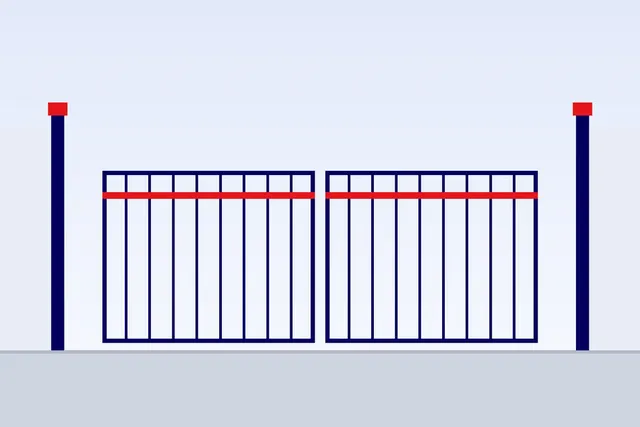
Automatic swing gates for villas, farms and compounds, using arm, ram or underground operators with safety de…
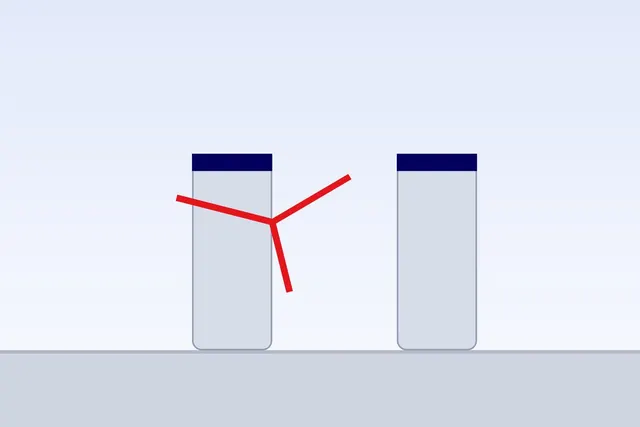
Tripod, full-height and speed-gate turnstiles that admit one person per credential, count entries and link to…
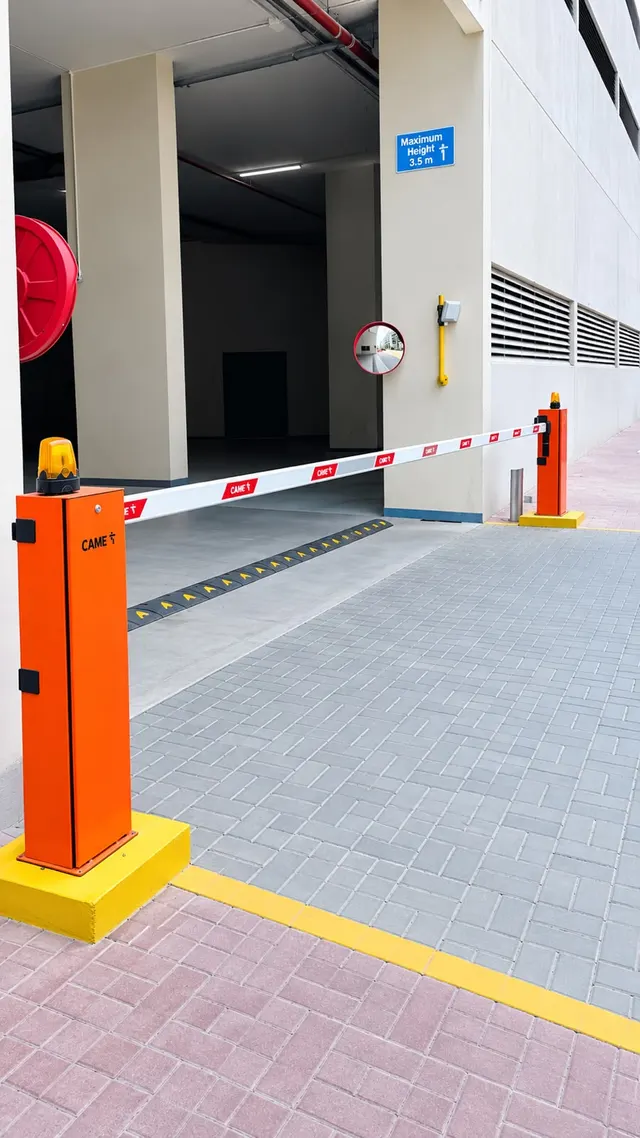
A low sliding barrier for vehicle entrances where a boom arm will not fit, working with loop detectors, photo…
Fold-down steel parking locks that keep your bay free, with remote, Bluetooth or app control and mains, batte…
02Dubai conditions
Motors, boards and batteries in direct sun run hotter than their data sheets assume. Shade, ventilation and a suitable duty rating matter.
Dust collects in tracks, rack and bottom rails. Cleaning and lubrication on a schedule keep travel smooth and the motor load low.
Near the shore, salt and humidity attack bare steel and exposed contacts. Finish, fixings and sealed enclosures are worth specifying.
Large solid leaves act as sails. Gates and shutters in exposed spots need the right locks, guides and limit settings.
They can, where you need to control who drives onto a forecourt, beach access road or pedestrian zone. Automatic bollards lower to let authorised vehicles in and rise to block others, and the top is usually marked so drivers can see it.
On Palm Jumeirah, salt air and moisture affect bollard housings and drainage, so materials and a drained pit matter. Cables and pipes beneath the surface must be located before any excavation. Approvals may be needed; ask your community management or the authority. See bollards or request a free site visit to look at the location.
Fixed bollards never move and simply block vehicles. Removable bollards lift out of a socket, and someone has to unlock and take them out by hand. Automatic bollards rise and fall using a motor or hydraulic unit, controlled by a card, remote, keypad or number plate reader.
Fixed units suit shopfronts and pedestrian areas. Automatic ones suit villa communities, hotel drives, malls and compounds where access is needed regularly. They cost more to install because of the pit and power, so choose by how often the lane must open. Our bollards service page covers each type, and a free site visit helps you choose.
One photo of the opening and one of the motor. We reply with questions or a price range, then book a free visit.
Send a photoPick what it is doing. You get a safe first step and the fastest way to book a repair.
Open the fault finderShort guides from the technicians: what to check, what to photograph, what to ask a supplier.
Get the checklists04Where we work
Call, message us on WhatsApp, or leave your number and we will call you.
We call you back