

Short answer: A new sensor is enough when the operator still moves the door smoothly by itself, the controller accepts a standard sensor input, and the fault is detection: ghost openings, missed people or a dirty or aimed-wrong head. Replace the operator when the motor, belt or board is failing, parts are gone, or the controller has no safety input to connect a modern sensor to. A technician settles it in one visit.
In short
- A sensor swap fixes detection faults. It does not fix a tired motor, belt or board.
- The controller must have an input for the new sensor and a safety input for the leaf edge.
- Sunlight, draughts and shiny floors cause many ghost openings. Move or mask before you replace.
- A door with no safety input cannot be made safe by bolting on a sensor.
- Send a photo of the header, the sensor and the controller label before the visit.
When is a new sensor enough for an old sliding door?
Only when the rest of the door is healthy. A sensor is the eyes of the door. It tells the controller that someone is coming, or that someone is in the doorway. If the eyes are the only thing wrong, a new sensor head is the right repair.
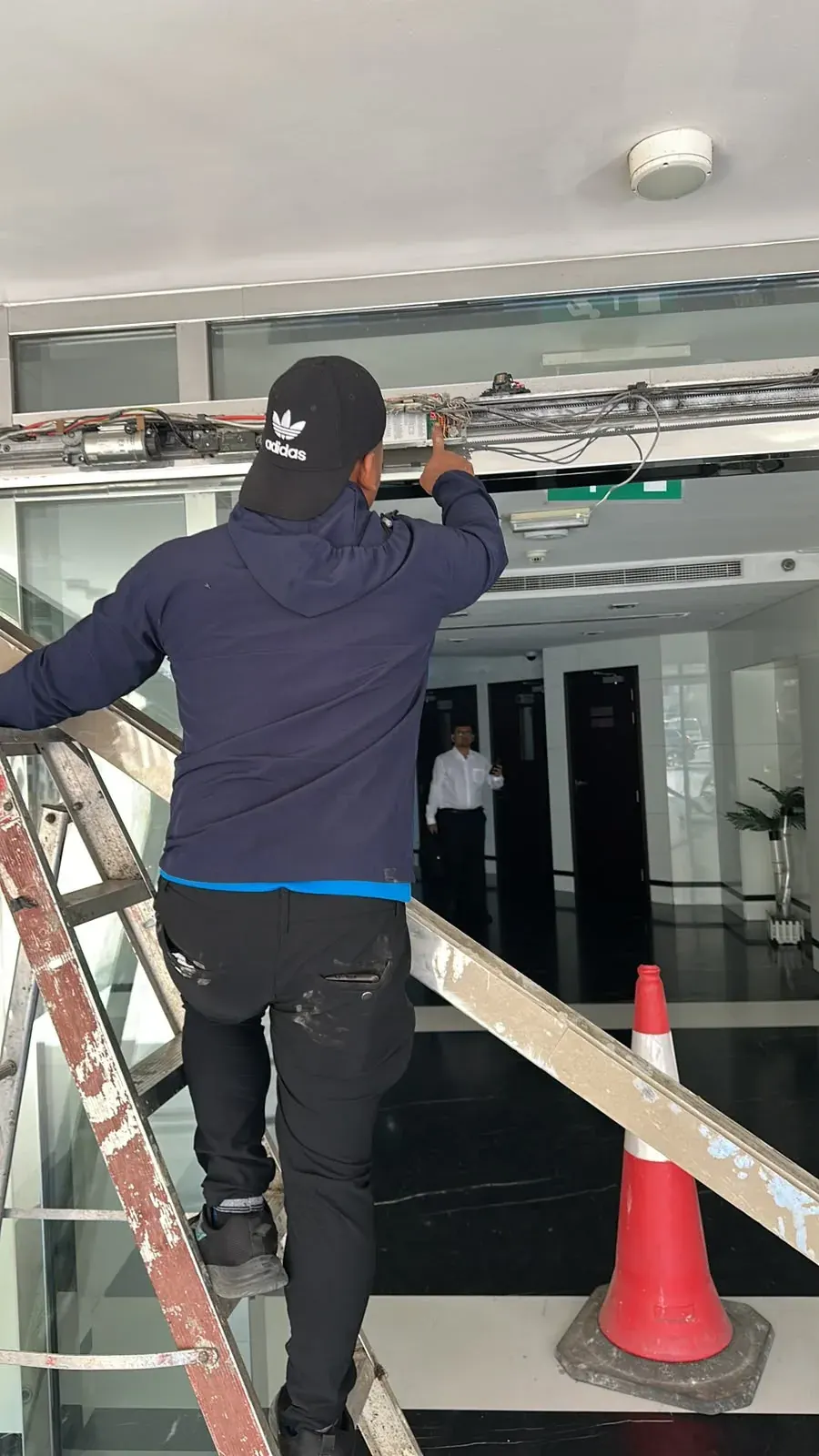
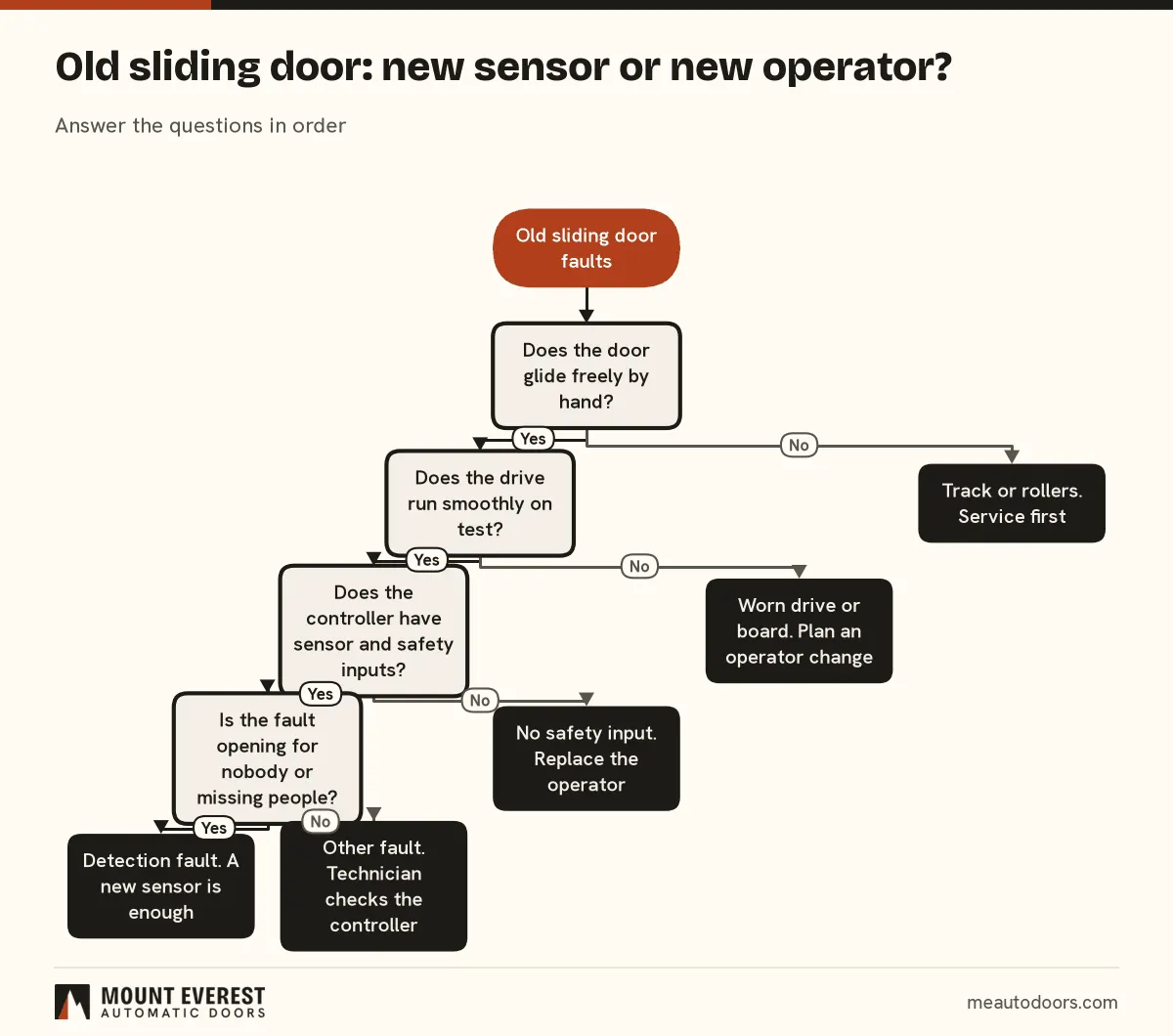
Walk through three tests. First, open and close the door by hand with the power off. It should glide, and the leaves should meet without catching. Second, power it up and trigger it with the test switch or a keyed input. If it opens and closes smoothly, the drive is working. Third, read the symptom: a door that opens for nobody, a door that opens by itself, and a door that closes on a person are all detection faults. Our guide on sliding door sensors that stop working covers the common faults, and the FAQ on why a sliding door sensor stops detecting people explains the usual causes.
What does a sensor actually do on a sliding door?
There are usually two jobs. An approach sensor, often a radar head over the door, tells the door to open. A safety sensor, often an infrared curtain or a beam at the leading edge of the leaf, stops it closing on a person or an obstacle. Older doors may have only the first, or a single head that does both badly.
- Radar (motion) heads detect something moving toward the door. They can pick up a fan, a curtain or a ceiling banner that sways.
- Infrared presence heads look at a patch of floor. Strong sunlight on a glass frontage can confuse them.
- Safety beams and curtains watch the doorway or the closing edge of the leaf. Dirt, a bent bracket or a wiped lens that has shifted can blind them.
Our overview of automatic door sensor types compares the heads, and the FAQ on why automatic glass doors do not clip people explains how the safety sensing works. In Dubai, glazed lobbies on Sheikh Zayed Road, in Deira and in Dubai Silicon Oasis get strong sun through the glass, and air conditioning pulls air through the doorway. Both are classic causes of a sensor opening for nothing.
Which symptoms suggest a sensor fault?
The table sorts common symptoms into a sensor fault, a controller fault or an operator problem. It is a guide, not a diagnosis.
Symptom, likely area, first action
| What you see | Likely area | First action |
|---|---|---|
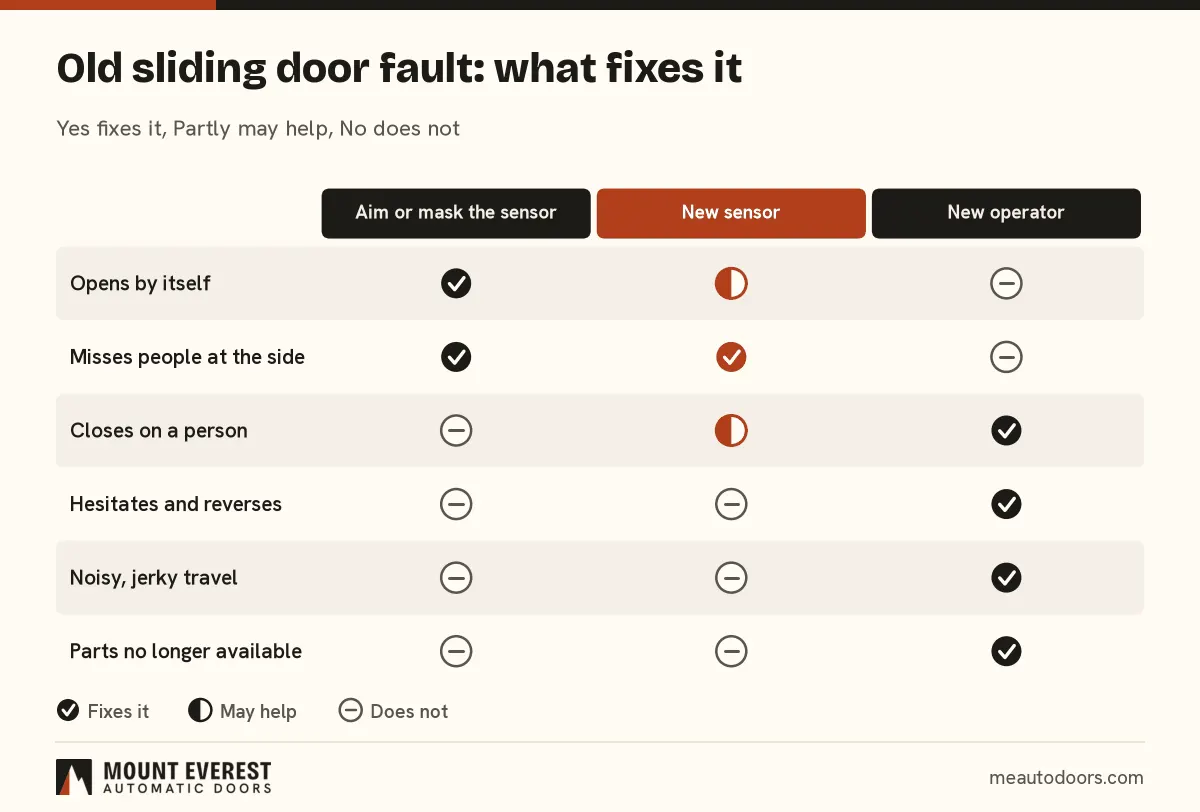
| Door opens when nobody is there | Sensor sees a draught, banner, reflection or the sun | Move or mask the cause. Retune the sensor. Replace only if it cannot hold the setting |
| Door does not open for people at the side | Detection field too narrow or aimed wrong | Adjust the angle and width. A newer head may cover a wider field |
| Door closes on a person or a bag | Safety input missing, bypassed or the safety head failed | Stop using the door in automatic mode until it is fixed |
| Door stays open | Sensor stuck on, dirty lens, or a controller input stuck | Wipe the lens, look at the status light, then call a technician |
| Door hesitates, slows or reverses | Drive, belt, rollers or board | Operator or maintenance fault, not the sensor |
| Door is noisy and jerky with new sensors fitted | Worn belt, rollers or motor | Operator service or replacement |
The chart repeats the same idea by remedy. Aiming or masking costs nothing and should come first.
When should the operator go instead?
Replace the operator when fixing the sensor leaves you with the same old door that is going to fail again, or when the old controller cannot be made safe.
- The controller has no safety input. A modern safety sensor needs a place to connect to. A very old controller may not have one, and a sensor wired as a trigger cannot stop the door closing on a person.
- The drive is worn. Belt wear, rollers worn flat, a rough motor or a board that resets randomly will not be cured by a head.
- Parts are gone. The brand may have changed its range. A discontinued operator may be repaired for a while, but a part that cannot be sourced ends the repair.
- The door has changed. Heavier glass, a longer leaf or a bigger opening than the operator was sized for needs a different drive.
- The opening has a new requirement. A new use may call for a break-out function, battery or fire release that the old operator does not offer. Ask the building management or the fire consultant what applies.
Our FAQs on old Dorma-branded drives and on repairing or replacing an ASSA ABLOY operator explain how to weigh the choice. We work on dormakaba, Tormax and GEZE doors in Dubai, among others.
What does a retrofit sensor job involve?
A good retrofit is short, but the checks matter. The technician does not just swap the head.
- Check the controller label and the manual, if one exists, for sensor inputs and supply voltage.
- Confirm the output type of the old sensor and of the new one, for example a normally open contact for approach and a normally closed contact for safety.
- Check the header space and the cable run. Old cable that has cracked insulation is replaced rather than reused.
- Fit the new head, set its width, depth and sensitivity, and mask any area that picks up traffic outside the door.
- Test with a still object in the doorway, a walk past the side of the door, and an obstruction in the closing path. The door must stop or reverse as designed.
- Record what was fitted, so the next visit starts from facts.
Standards such as EN 16005 cover the safety of power-operated pedestrian doors in general terms. We do not tell you what applies to your building. Ask the building management or the consultant whether a safety review is needed for your type of premises. Where we are not satisfied that a door is safe, we say so and advise a fix rather than a workaround.
What should you send us for a sliding door survey?
What to send us
- A photo of the door from the lobby side and the outside, with the leaves closed.
- A photo of the header with the cover off if it opens easily. Do not climb to take it.
- The sensor brand and the controller or operator label.
- A short video of the door opening for nobody, or failing to open for someone.
- The door width, the glass type and whether the door sees direct sun.
- The area: Deira, Al Rigga, Al Garhoud, Dubai Silicon Oasis or another part of Dubai.
You can send these through the form at the end of this page. A clear picture often lets us say whether it is a sensor job before the visit.
How does a visit with Mount Everest work?
Mount Everest Automatic Doors is an installer and service company. We do not make the sliding doors or sensors we fit. Our base is in Al Quoz, Dubai. A technician visits, opens the header, tests the drive and the sensor inputs, and tells you honestly whether a new sensor is enough or the operator should be replaced. We give a written quote after seeing the door.
See a recent job: automatic glass door maintenance in Deira, which describes the operator header opened, the belt, rollers and track checked, and the sensors tested. For a new door, see the sliding glass door installation in Silicon Oasis.
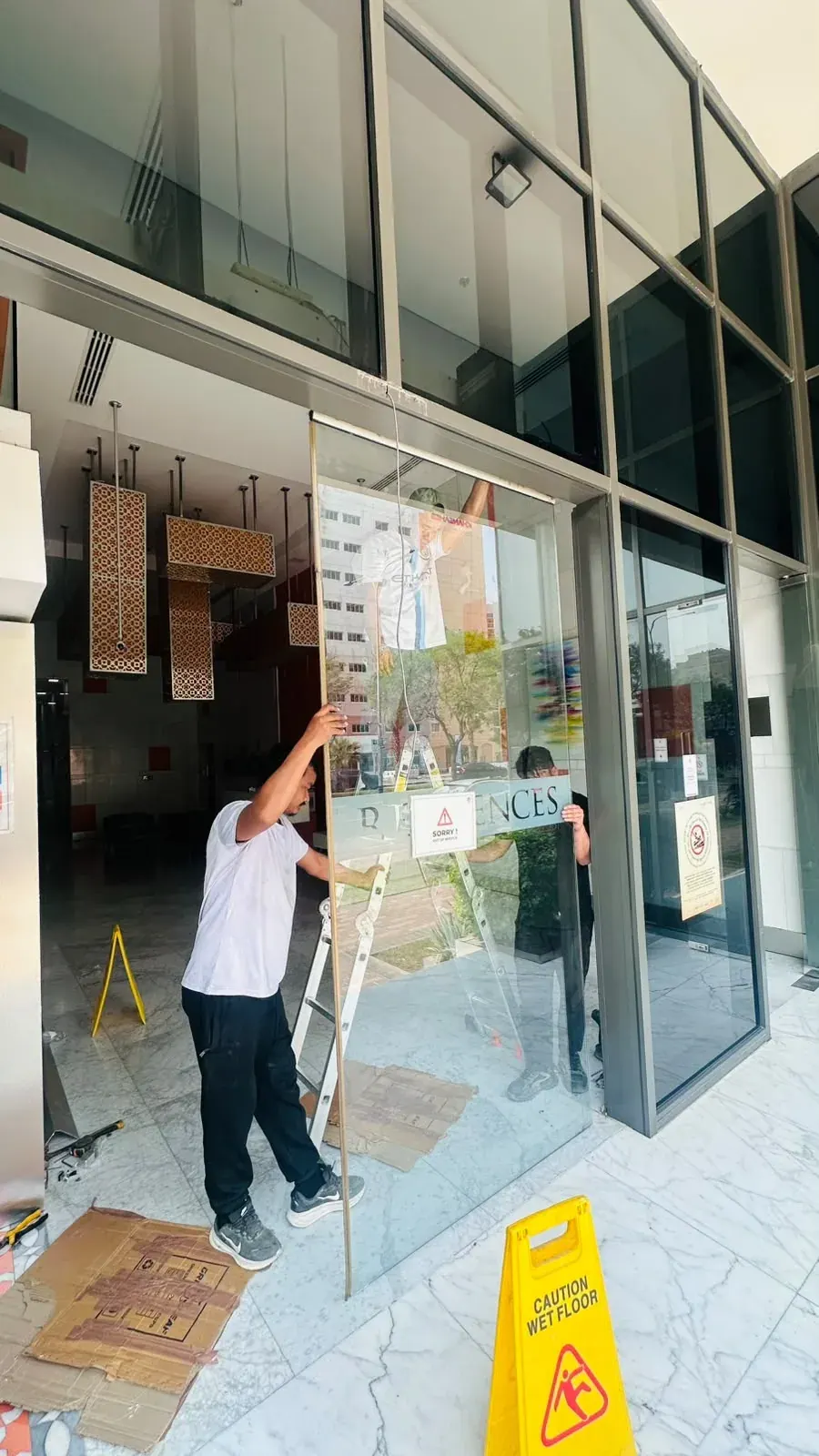
For the equipment, see automatic sliding glass doors, the Dubai supply page and automatic revolving doors. For service, see our sliding and revolving glass door repair in Dubai and the wider revolving and sliding glass door page.
Frequently asked questions
Can I replace the sensor on my own sliding door?
You can wipe the lens and check the aim. Replacing the head means working at a header above the door, with live low voltage wiring and, on some doors, mains voltage. A wrong connection can leave the door without its safety stop. We advise a technician for the swap, and a test with an obstruction before the door goes back into automatic mode.
Why does my door open by itself at the same time each day?
A repeating pattern usually follows the sun, an air conditioning cycle or a moving object. A sun patch on the floor can trip an infrared head, and a fan or banner can trip a radar one. Note the time and the weather. Often the fix is aiming, masking or a sensitivity setting, not a new sensor. See also why a glass sliding door opens when nobody is there.
Will any new sensor fit my old controller?
Not automatically. The sensor must match the controller supply voltage and the type of contact it expects. Some old controllers have only a trigger input and no safety input. In that case, a sensor can open the door but cannot be trusted to stop it on a person. The controller label tells us which case you have.
Can a worn belt be fixed by changing the sensor?
No. A worn belt, tired rollers or a rough motor cause hesitation, noise and reversing, and none of these is a detection fault. A new sensor on a tired drive gives you a door that detects well and still stutters. Check the belt and rollers first, then decide between a repair and an operator replacement.
Does sunlight on a glass door affect sensors?
Yes. Direct sun on the floor or on the glass can disturb infrared heads and cause ghost openings or missed detection. Radar heads are less affected but pick up movement outside. A good installer picks the head type for the exposure and sets the field so it does not reach the pavement or the car park.
How do I know if my door is safe to use in automatic mode?
Stand in the doorway while the door is open and ask a colleague to trigger it to close. It should stop or reverse at once. Walk toward the door from both sides, and place a soft obstacle in the closing path. If anything fails, switch to manual or hold-open and call us.
Ready to sort out your old sliding door?
Call +971 50 494 8667 or use the quote form. Send photos of the header, the sensor and the label through send a photo, or book a site visit. We work in Dubai first and book jobs in other emirates by appointment. We give a written quote after seeing the job, and we do not guess prices.
Want this done properly?
Send a photo of your door or gate and we will tell you what we see.