
Short answer: A rolling shutter or automatic door near a fire exit raises one question before any other: what must it do when the fire alarm sounds or the power fails? The answer comes from your fire consultant and, where it applies, Dubai Civil Defence, not from the supplier. Take the question list below to the consultant, get the answers in writing, then brief the contractor.
In short
- Decide first whether the opening is on an escape route, on a fire compartment boundary, or neither.
- A shutter that must close on alarm and a shutter that must open on alarm are different products with different wiring.
- Ask for the fire alarm cause and effect matrix and the test report for the exact assembly.
- Confirm what happens on power failure and how staff release the door by hand.
- We are not the authority. We do not certify compliance, and nothing here replaces your consultant's advice.
Why does a shutter or door near a fire exit need a separate conversation?
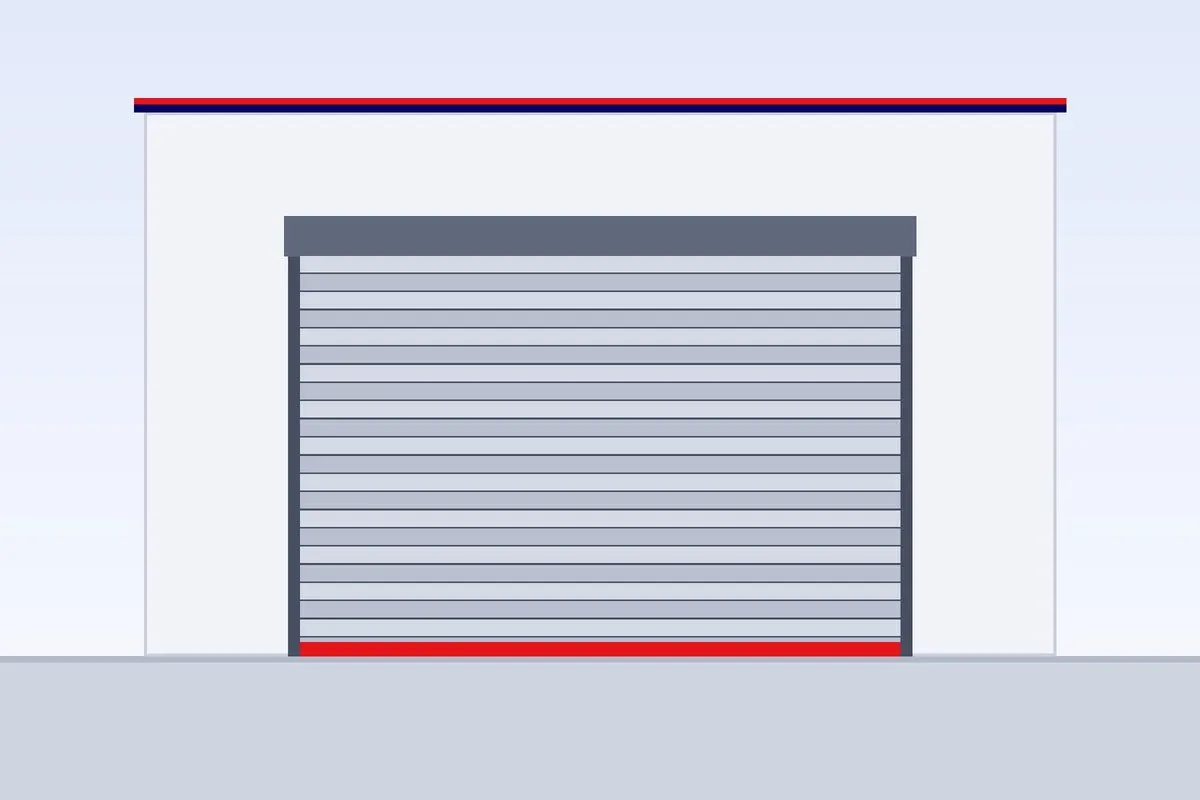
Because the same hardware can be required to behave in opposite ways. A shutter across a shopfront in an escape route should not trap anyone, while a shutter on a compartment boundary may be expected to come down and hold fire back. Both look like rolling shutters in a catalogue.
The rule that applies to your unit depends on the building type, its fire strategy, its occupancy and the authority that reviewed the drawings. In the UAE, consultants commonly work from the UAE Fire and Life Safety Code of Practice together with the local authority's own requirements. Ask which edition and which local circulars apply to your building. We have not read your drawings, so we cannot say.
Which kind of opening do you have?
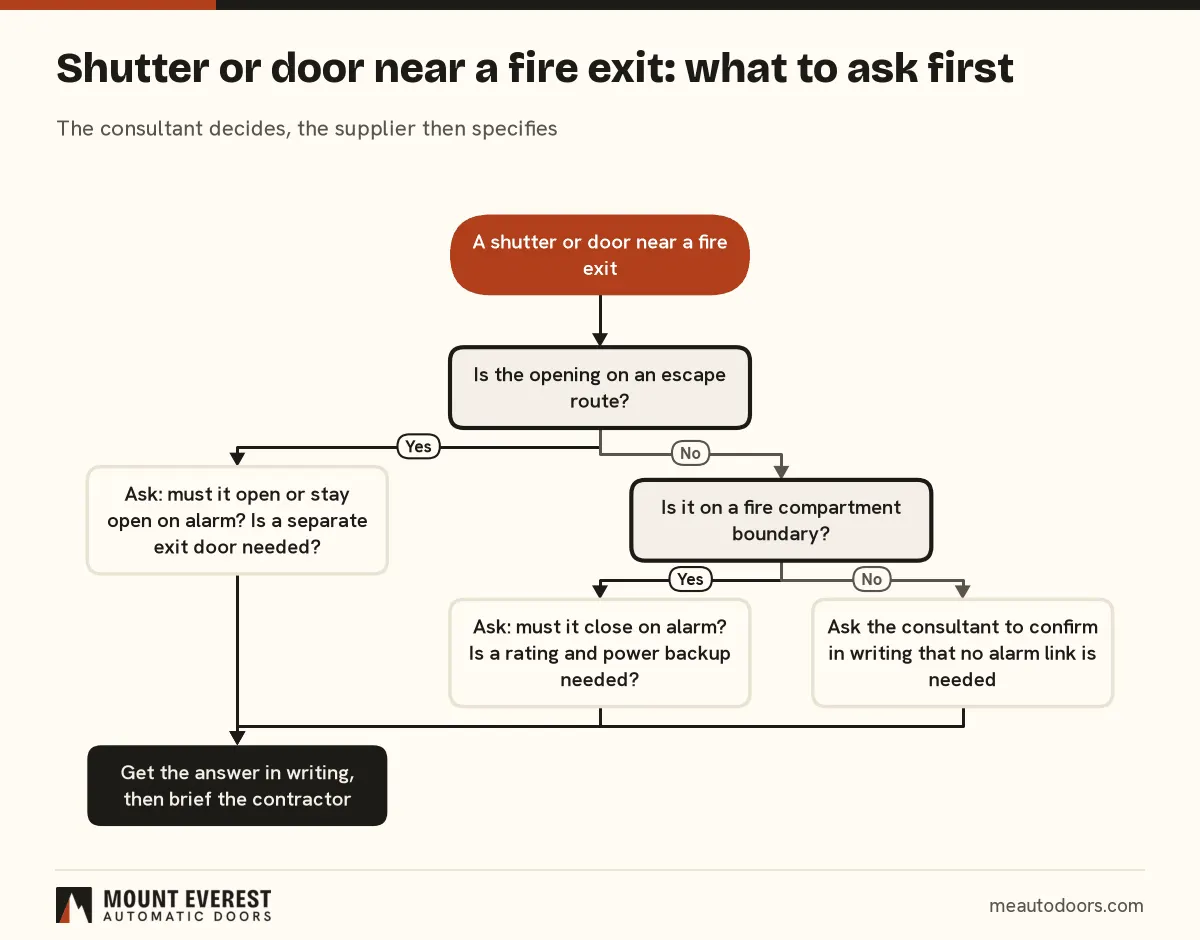
Start with the drawing. Ask the consultant to mark the opening as one of three things: part of an escape route, a boundary between fire compartments, or neither. The chart shows how the answer changes what you ask next.
What should I ask the consultant, and what should I ask them to produce?
Treat this as a question list, not a checklist of rules. For each row, get an answer in writing and ask for the document in the last column.
Topic, question, document to ask for
| Topic | Question to put to the consultant or authority | Document to request |
|---|---|---|
| Role of the opening | Is the opening on an escape route, a compartment boundary, or neither? | Fire strategy drawing with the opening marked |
| Behaviour on alarm | Must the shutter or door close, stay as it is, or open when the alarm sounds? | Fire alarm cause and effect matrix |
| Fire rating | Is a fire rated assembly required, for how long, and to which test method? | Test report or classification for the exact door and frame |
| Power failure | What must the door do if mains power is lost? Is a battery or a fail-safe release needed? | Wiring diagram and the power backup specification |
| Manual release | How does a person open or release it by hand in an emergency, and who is trained? | Operating instructions and a trial on site |
| Pedestrian escape | Is a separate escape door needed beside a shutter or a revolving door? | Drawing showing the exit door and its width |
| Smoke | Is smoke sealing required at the edges and the head box? | Specification clause and sealing details |
| Testing and records | Who tests the alarm link, how often, and where are results kept? | Test certificate and a log template |
| Sign off | Who gives the final approval for this opening? | Approval letter or completion record |
Should a shutter close or open when the fire alarm sounds?
It depends on what the shutter is protecting. Our existing answers on what fire integrated means for a rolling shutter and on how a shutter connects to the fire alarm panel give the basic picture. In short, a typical connection is a dry contact signal from the alarm panel to the shutter controller, and the controller reacts the way it was set up.
- Closing on alarm. Used where the shutter closes a compartment opening. It needs a reliable closing route, often with a power backup so it still closes in an outage, and clear safeguards so nobody is trapped under the curtain.
- Opening or staying open on alarm. Used where the shutter would block an escape or access route. The controller drives it up, or locks it open, when the alarm sounds.
- No link at all. A security shutter on a unit that has a separate, unobstructed escape door may need no link. That is the consultant's call, not ours.
Do not accept a verbal answer from any supplier on this. Ask the consultant to write which behaviour applies, and give that sentence to the contractor.
What about automatic doors on an escape route?
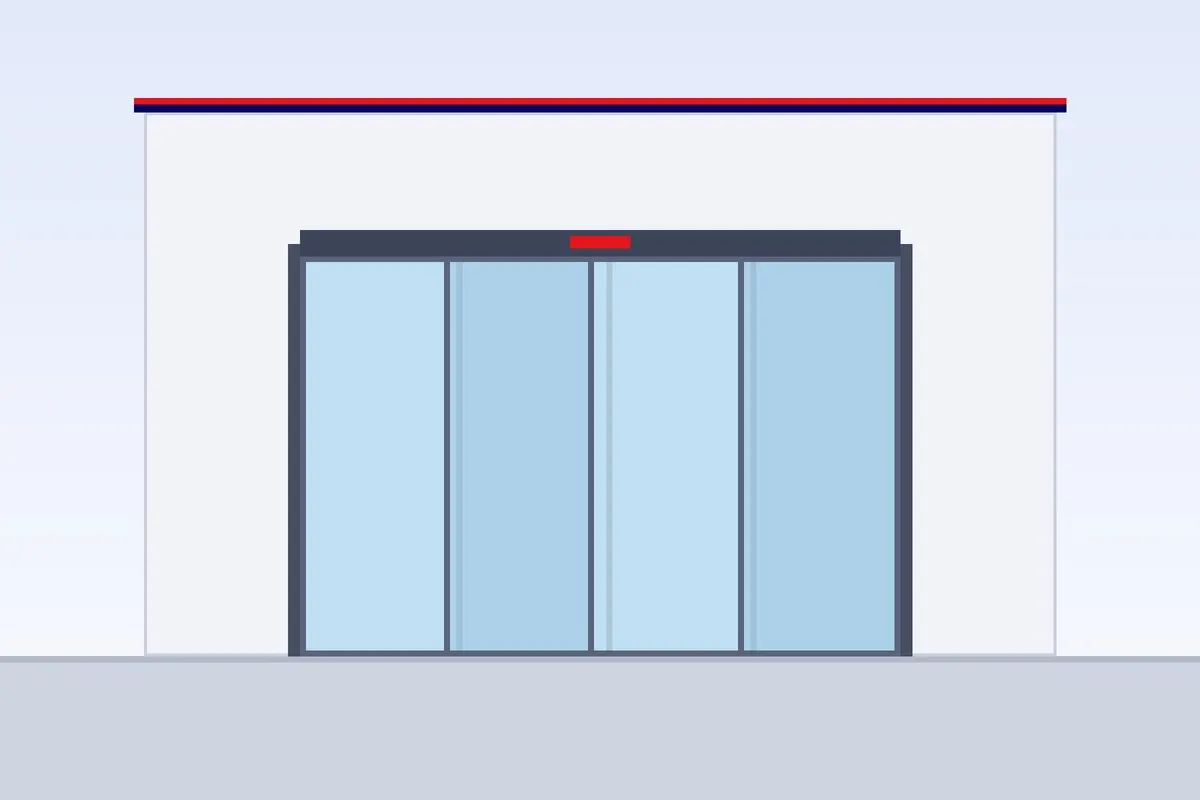
For doors on escape routes, ask the consultant how the door should behave on alarm and on power failure, and whether a manual breakout or a swing leaf is expected. Our automatic sliding glass doors and similar products are chosen with that answer in hand. Revolving doors have their own questions about how they stop and fold; see the answer on how a revolving door behaves in a fire or evacuation.
Where several security doors work as a sequence, such as a mantrap, the exit behaviour needs the same discussion. Our service page on mantrap security doors shows the types.
How do Al Quoz, Jebel Ali and Dubai Investments Park units differ?
Industrial and warehouse units raise their own points. A tall shutter or a loading bay door in a warehouse often needs a plan for how people leave the building when the main door is closed. A separate pedestrian door beside the shutter is common, but whether it meets the requirement is for the consultant to say.
- Al Quoz has many mixed units with shutters facing the street. Landlords may have their own rules on what can be changed.
- Jebel Ali and the free zone have large facilities, where access for the work itself is planned, for example lifting equipment. See the project note below.
- Dubai Investments Park has many warehouse bays with shutters above the loading doors.
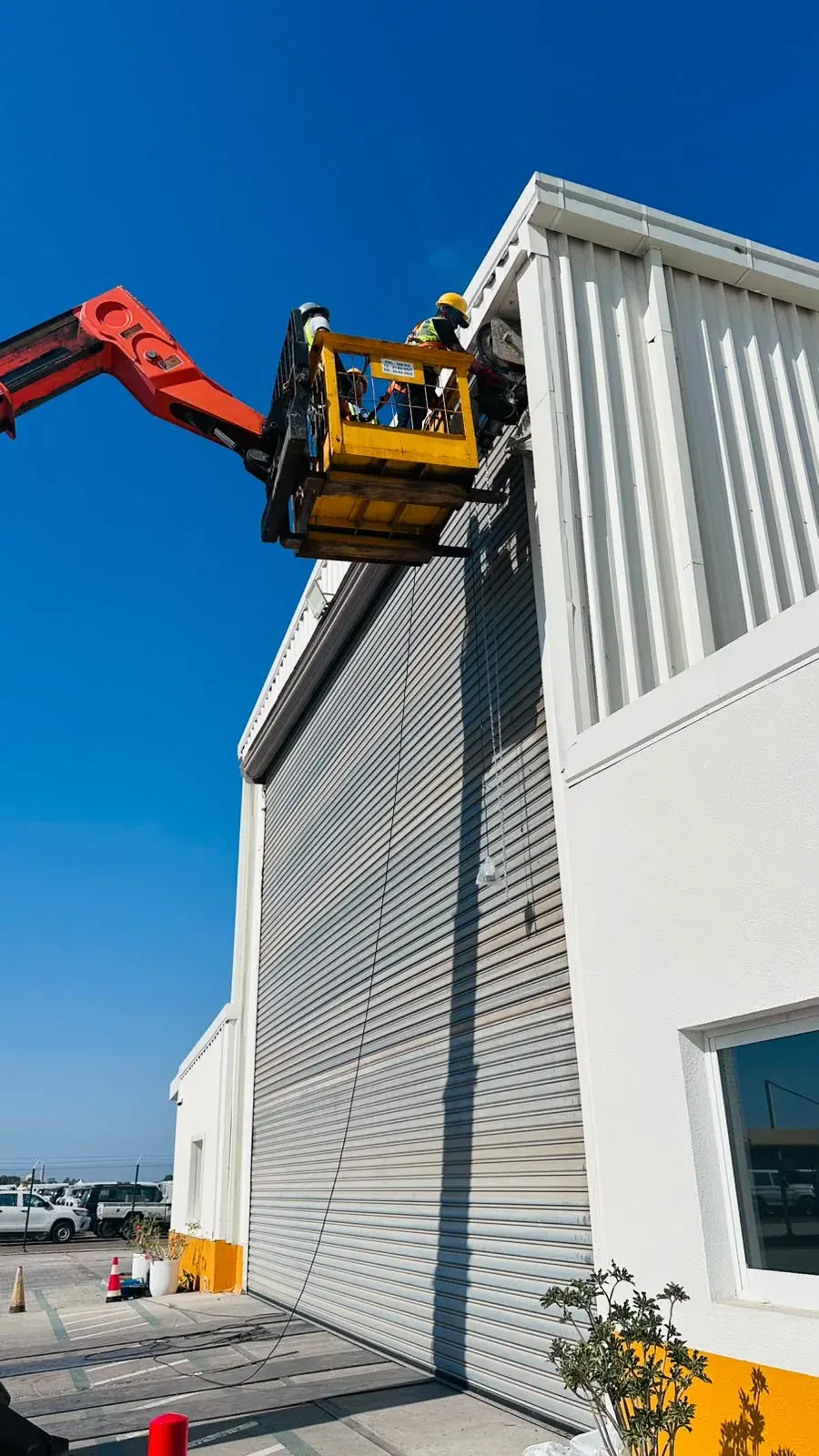
A recent job we completed was rolling shutter maintenance in the Jebel Ali Free Zone. The door is very large, so even routine work needed lifting equipment and a planned approach to access.
Who should I talk to, and in what order?
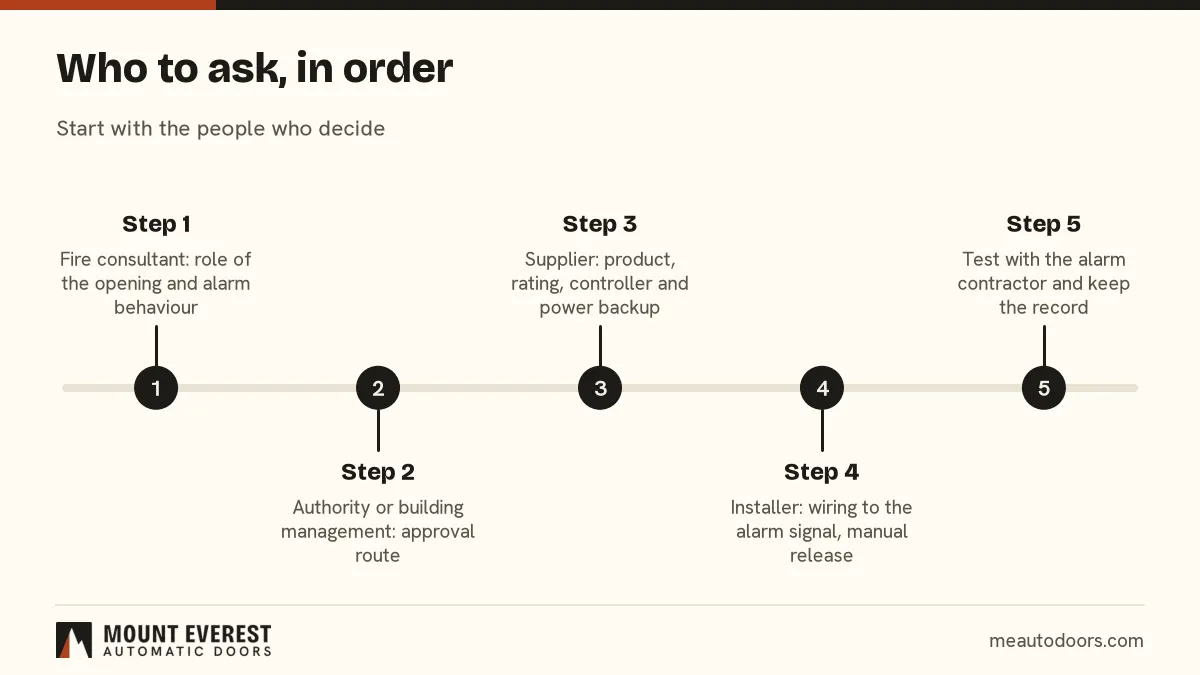
Most delays come from asking the supplier first. A better order starts with the people who decide, and ends with the people who build. The timeline below shows the order we suggest.
What do I send to Mount Everest Automatic Doors?
What to send us
- A photo of the opening from the inside and from the outside.
- The width and height, and whether a pedestrian door sits beside it.
- The shutter or door brand and the motor label, if fitted.
- The consultant's written answer on alarm behaviour, if you have it.
- Whether the opening is in a warehouse, a shop, a villa or a tower.
Mount Everest Automatic Doors is an installer and service company, not a manufacturer, and we do not hold the authority's approvals on your behalf. A technician visits free before anything is fitted, checks the opening, power and controller, and then we give a written quote after seeing the job. We can wire the controller to the alarm signal that your consultant specifies. See our work on rolling shutter doors and the products automatic rolling shutters and double skin insulated rolling shutters.
How do I keep it tested afterwards?
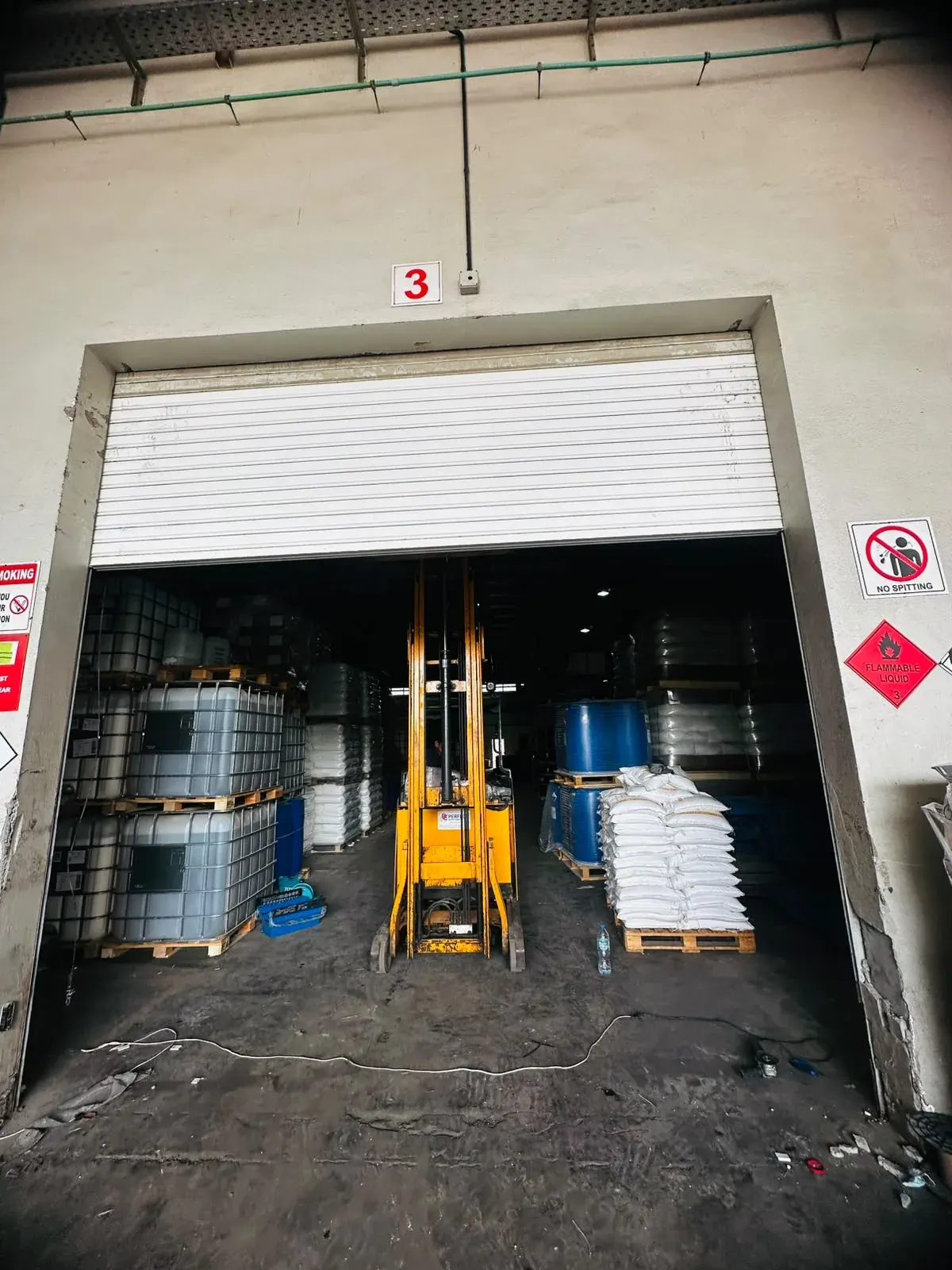
Ask the consultant how often the alarm link must be tested and who signs the record. Then put that into a service plan. Our maintenance contract page explains how scheduled visits work, and a visit log can hold the test date and result.
Frequently asked questions
Does every rolling shutter need to connect to the fire alarm?
No. Whether a shutter needs a link depends on where it sits and what it protects. A shutter on a fire compartment boundary, or one that could block an escape route, often does. A shutter on a unit with a separate, clear exit door may not. The consultant decides, and we then wire what is specified.
Can a shutter be used as a fire exit?
A shutter on its own is normally not an exit. Escape is usually through a separate door of the width and type the fire strategy asks for. If you plan to rely on a shutter in an emergency, ask the consultant in writing first, because the answer depends on the building and its occupancy.
What does fail safe mean for an automatic door?
It means the door goes to a defined safe condition when power or the alarm signal is lost. For an escape door that is usually open or free to push open. For a compartment shutter it may be closed. Which is correct for your door is a decision for the consultant.
Who tests the link between the fire alarm and the door?
Usually the alarm contractor tests the panel, and the door contractor tests the door response. The consultant or building management may witness the test. Ask who holds the record, and keep a copy with your service documents so the next inspection does not start from zero.
Can you give me a Civil Defence approval for my shutter?
No. We are an installer and service company, and we do not issue or hold approvals on your behalf. The approval route is through your consultant and the authority. We can supply product information and carry out the wiring and installation the approved design asks for.
What should I do if my shutter will not open during a power cut?
Check whether it has a manual release or a hand chain and whether staff know how to use it. If you cannot move it safely, stop, keep people away from the opening and call a technician. Do not force a shutter, because springs and barrels hold stored energy.
Ready to brief a contractor on your shutter or exit door?
Call +971 50 494 8667 or use the quote form. Send the photos and the consultant's note through send a photo, or book a free site visit. We cover Dubai, with jobs in other emirates booked by appointment.
Want this done properly?
Send a photo of your door or gate and we will tell you what we see.