
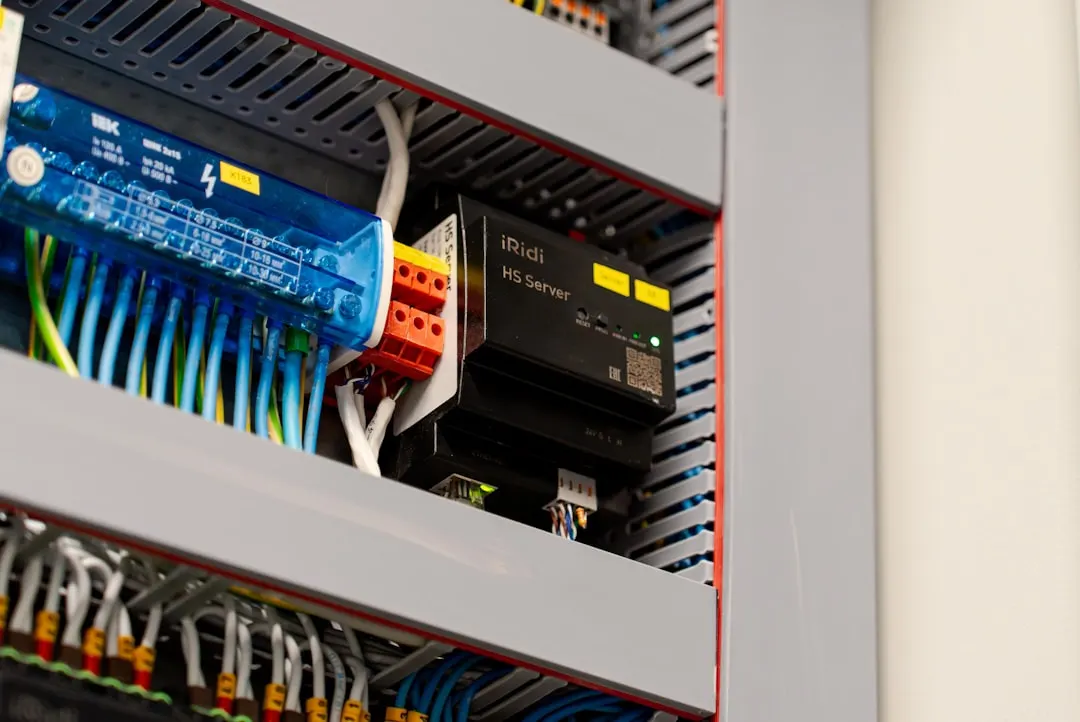
Choosing the ideal access control system for your office entrance in Dubai requires weighing security, convenience, and how well the technology withstands regional heat and dust. Facility managers typically evaluate three primary credentials, namely RFID cards, biometric readers, and mobile applications, each offering distinct advantages for corporate spaces ranging from Business Bay high-rises to Al Quoz industrial offices. Integrating your chosen hardware with professional smart door automation and access control systems in Dubai ensures a seamless flow of employees while keeping unauthorized visitors out.
Understanding Office Entrance Control in Dubai
Modern commercial properties demand sophisticated perimeter security that goes far beyond a traditional mechanical key and lock. An effective office entrance in Dubai must coordinate directly with automatic sliding doors, speed gates, or turnstiles to prevent tailgating and forced entry. Businesses operating in vibrant commercial districts face heavy daily foot traffic from employees, couriers, and clients. Balancing open hospitality with strict building security is the primary challenge for facilities managers across the emirate.
Local environmental factors also dictate hardware selection. Fine airborne sand, intense direct sunlight on glass facades, and high summer humidity test the limits of optical sensors and electronic locking bolts. Choosing resilient hardware that pairs with robust access control systems protects your investment from premature wear. Furthermore, understanding regional data privacy regulations ensures that employee credential records are stored and managed in full compliance with local laws.
RFID Cards and Fobs: The Reliable Workhorse
Radio Frequency Identification credentials remain the most widely deployed security technology for corporate offices, multi-tenant commercial buildings, and back-of-house staff entrances. An RFID card or key fob contains an embedded microchip that transmits a unique serial number via radio waves when brought close to a wall-mounted reader. Modern installations utilize encrypted Mifare or DESFire smart card technologies to prevent cloning and unauthorized duplication.
The primary benefit of RFID is scalable economy. Issuing replacement cards or provisioning hundreds of new employee badges is inexpensive, making this approach ideal for high turnover workforces. Temporary paper or plastic badges can also be programmed with time-limited access for visiting contractors. However, physical cards introduce vulnerabilities such as loss, theft, and credential sharing where one employee taps a colleague through the door.
Biometric Systems: Maximum Security and Accountability
Biometric access control eliminates the risks associated with lost cards by tying entry directly to the individual employee. Technologies include fingerprint scanners, 3D facial recognition, and iris scanners. When an individual approaches the reader, the system captures a biometric template, converts it into a mathematical algorithm, and compares it against a secure database before signaling the door operator to unlock.
For high security zones, server rooms, or executive suites, biometrics provide absolute accountability because credentials cannot be handed off to a colleague. Many organizations explore options outlined in our guide on biometric vs. RFID access control in Dubai when upgrading their security posture. The main considerations for biometrics involve initial hardware expense and processing speed during peak arrival times, as facial and fingerprint scans can occasionally create slight queues at busy office turnstiles.
Mobile Access Control: The Modern Smartphone Credential
Mobile access control utilizes Bluetooth Low Energy and NFC technology embedded in smartphones to grant entry through office doors. Employees simply tap an app or wave their phone near the reader to trigger the automatic door opener. This approach aligns with modern workplace expectations and offers a frictionless entry experience for tech-savvy corporate teams.
Cloud management platforms make mobile credentials exceptionally easy to provision and revoke remotely. If an employee resigns or loses a phone, an administrator can instantly deactivate their digital key from a central dashboard without collecting physical hardware. Facilities managers looking for remote oversight often pair mobile credentials with specialized cloud access control and remote door monitoring to oversee multiple office branches across Dubai from a single interface.
Comparison of Office Access Control Technologies
| Credential Type | Security Level | Convenience | Initial Cost | Susceptibility to Dubai Climate | Best Suited For |
|---|---|---|---|---|---|
| RFID Cards & Fobs | Moderate | High | Low | Low to Moderate (plastic warping in direct sun) | Large workforces, high turnover offices, warehouses |
| Biometric Readers | High | Moderate | High | Moderate (dust accumulation on optical lenses) | Executive suites, secure data rooms, financial firms |
| Mobile App Access | High | Very High | Medium | Low (device stays protected in pockets/bags) | Modern tech agencies, multi-tenant corporate towers |
Step-by-Step Guide to Planning Your Office Entrance
Implementing a new access control infrastructure requires careful coordination between IT security, facilities management, and your door automation provider. Following a structured planning process prevents costly delays during fit-out and ensures compatibility between your readers and door operators.
- Assess Daily Foot Traffic: Calculate peak arrival and departure numbers to determine if standard swing doors, automatic sliding doors, or flap barrier and speed gates are required to maintain a smooth flow.
- Define Security Zones: Categorize your office floor plan into public reception areas, general open-plan workspaces, and restricted private boardrooms or server rooms.
- Choose Credential Mix: Decide whether your entire workforce uses mobile apps, or if a hybrid model featuring biometrics for management and RFID for general staff is more practical.
- Select Hardware Integration: Ensure your access control panels integrate seamlessly with your door locking mechanisms, emergency break-glass units, and fire alarm systems.
- Schedule Professional Installation: Partner with certified technicians to mount readers, run secure cabling, and test the system against local environmental conditions.
Costs and Factors That Affect Access Control Investment
Evaluating the investment required for office access control involves looking beyond the sticker price of individual card readers or biometric scanners. Total project cost depends on the scope of hardware integration, the number of entry points, and the complexity of the software management platform. Properties requiring heavy-duty physical barriers like tripod turnstiles or automated glass sliding doors will naturally carry higher equipment and installation expenses than a single glass office door with an electronic strike lock.
Other cost factors include cabling infrastructure, software licensing fees for cloud management dashboards, and labor requirements for complex wall integrations. Investing in commercial-grade hardware reduces long-term operational expenses by minimizing unexpected breakdowns caused by regional dust and heavy daily use. To explore integrated strategies further, read our insights on biometric & RFID access control integration for commercial properties.
UAE-Specific Considerations for Dubai Offices
Operating electronic entrance systems in Dubai presents unique environmental and regulatory challenges that equipment sourced from cooler climates often fails to handle. Fine desert dust can penetrate optical fingerprint scanners and mechanical card slots, causing read errors or sensor failure. Facilities managers should select outdoor-rated readers with high ingress protection ratings if entrance doors are exposed to direct sunlight or humid outdoor air in areas like JLT or Dubai Marina.
Building types also dictate access requirements. Ground floor offices with large glass facades in Business Bay require sleek mullion-mounted readers that complement modern interior aesthetics without obstructing visibility. Furthermore, commercial properties must comply with local civil defense and life safety regulations, ensuring that all electronic locks automatically disengage during power failures or emergency alarm activations.
Maintenance and Safety Compliance
Routine maintenance is essential for keeping office entrance control systems operational and secure. Dust accumulation on biometric glass plates or wear on electronic locking bolts can compromise door security if left unchecked. Establishing a preventative maintenance schedule prevents sudden failures that can disrupt morning arrivals and frustrate tenants or visiting clients.
Safety compliance is equally critical. Every automated office door connected to an access control reader must feature clearly marked emergency override buttons, battery backup units, and unimpeded manual egress routes. Working with experienced professionals ensures your installation adheres to strict municipal safety codes while protecting your staff and property assets around the clock.
When to Call a Professional Entrance Automation Provider
Attempting to install or troubleshoot commercial access control systems without specialized expertise often leads to wiring errors, damaged door operators, and compromised building security. You should contact a qualified automation specialist when planning a new office fit-out, upgrading legacy hardware, or experiencing recurring faults with your door locks and readers.
Mount Everest Automatic Doors operates from our facility on First Al Khail Street in Al Quoz, serving commercial clients throughout Dubai Marina, Downtown Dubai, JLT, Business Bay, and beyond. We provide complete solutions including Secure-Gate RFID Access Control, professional installation, and comprehensive Annual Maintenance Contracts to keep your business running smoothly.
Frequently Asked Questions
Which access control system is best for a busy Dubai office?
The best system depends on your company culture and security priorities. Mobile access offers ultimate convenience for tech-focused teams, while hybrid setups combining RFID for general staff and biometrics for secure rooms provide a balanced approach for larger corporate environments.
Can access control readers withstand Dubai summer heat and dust?
Commercial-grade readers designed for the regional climate feature sealed housings and high ingress protection ratings to resist fine sand and high ambient temperatures. Selecting industrial-rated hardware prevents premature sensor degradation in exposed ground-floor lobbies.
What happens to access control doors during a power outage?
Dubai building regulations require all automated access control systems to integrate with emergency fire alarm panels. During a power failure or fire emergency, electronic locks automatically disengage to allow safe, unobstructed manual egress for everyone inside the office.
How do I integrate access control with existing glass office doors?
Specialized drop bolts, magnetic locks, and slimline electric strikes can be retrofitted to glass swing or sliding doors. Technicians wire these locking mechanisms to your access control panel and motion sensors to ensure smooth, secure operation.
Is mobile access secure compared to physical RFID cards?
Mobile access is often more secure than physical cards because smartphones feature built-in biometric security like FaceID or fingerprint unlock before transmitting credentials. This prevents unauthorized use if an employee simply leaves their phone unattended.
How often should access control hardware be serviced?
Commercial access control and automatic door systems should be inspected and serviced at least twice a year. Regular professional maintenance includes cleaning biometric lenses, testing emergency overrides, and calibrating door sensors against dust accumulation.
Can I manage multiple Dubai office locations from one dashboard?
Yes, modern cloud-based access control platforms allow facilities managers to administer user credentials, view entry logs, and lock or unlock doors across multiple branches in different neighborhoods from a single centralized web or mobile dashboard.
Contact Mount Everest Automatic Doors today to schedule your free site survey and receive a same-day written quote for your office entrance control project. Reach our team by phone or email to discuss tailored automation and security solutions for your Dubai property.
Related services in Dubai
Want this done properly?
Send a photo of your door or gate and we will tell you what we see.